
Filipino professional walking outside in morning light near a Manila street, holding a water bottle, relaxed posture

Parang Lutang ang Isip? Here’s the “Clarity Protocol” (Taglish PH)

Minsan ang brain fog is sleep debt + stress + caffeine timing—not “katamaran.” This guide gives what to do today + a 7‑day reset.

3 min read

Quick answer (TL;DR)

Kung araw-araw kang lutang (parang zombie sa work, hirap mag-focus, slow mag-isip), hindi ibig sabihin “tamad ka.” Often, it’s a mix of sleep debt, stress load, and the coffee loop. Sleep problems can be associated with worse cognitive performance in adults, and sleep deprivation can impair next-day performance for many people. [1][2]

Safety note: If the confusion is sudden and severe, or you have alarming symptoms (fainting, severe shortness of breath, severe chest pain/pressure), seek urgent medical care. [5]

Today goal

  • Get one “anchor” block: light + water + food + movement.

  • Stop the caffeine escalation.

  • Protect tonight’s sleep window.

If you want the full product breakdown (ingredients, safety, who should avoid), read: KeepCalm Review Philippines (2026).

Filipino office worker staring at a computer screen with a tired “brain fog” expression and a coffee cup nearby
“Lutang” is often a system problem, not a character flaw.

Bakit ka “lutang”? (Taglish, no diagnosis)

“Brain fog” is a broad feeling: slow thinking, low focus, forgetfulness, and low energy. Many factors can contribute. This guide focuses on the most common, fixable drivers.

1) Sleep debt (kahit “nakakatulog” ka)

Even if you sleep, the quality/timing might be poor (late nights, fragmented sleep). Sleep problems are linked to worse cognitive performance in some studies. [1]

2) Stress load keeps your brain “online”

Chronic stress can keep the nervous system activated—so your body rests, but your mind doesn’t fully recover.

3) Coffee loop (puyat → more coffee → worse sleep)

Caffeine can disrupt later sleep for some people, which keeps the cycle going. [3] If coffee makes you kabog/jitters or anxious, timing and dose matter. [4]

4) Screen overload + no “off switch”

Doomscrolling late at night and constant notifications keep the brain in high-alert mode.

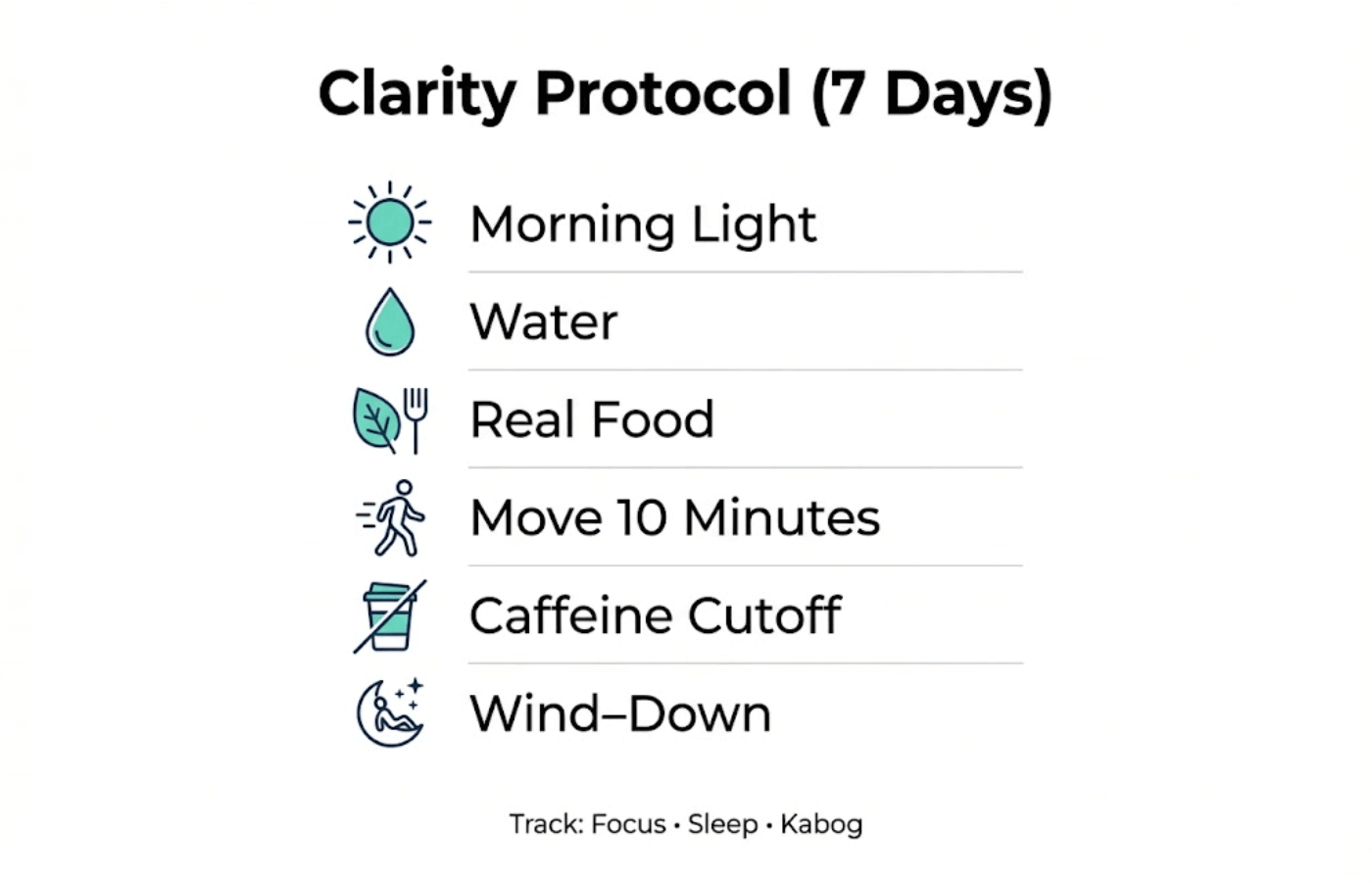
The Clarity Protocol (Today + 7‑Day Reset)

  1. 1

    Today: light + water + food + movement

    Get 10 minutes of daylight, drink water, eat a real meal/snack, and do a short walk or stretch.

  2. 2

    Today: stop the caffeine escalation

    If you’re already wired, don’t add another cup. If coffee triggers kabog/jitters, reduce dose and move it after food. [4]

  3. 3

    Today: protect tonight’s sleep window

    Pick a caffeine cutoff so you don’t sabotage sleep. If sleep gets worse after coffee, move the cutoff earlier. [3]

  4. 4

    Days 1–3: fix the “inputs”

    Consistent wake time, morning light, and a simple night wind-down.

  5. 5

    Days 4–7: reduce stimulation at night

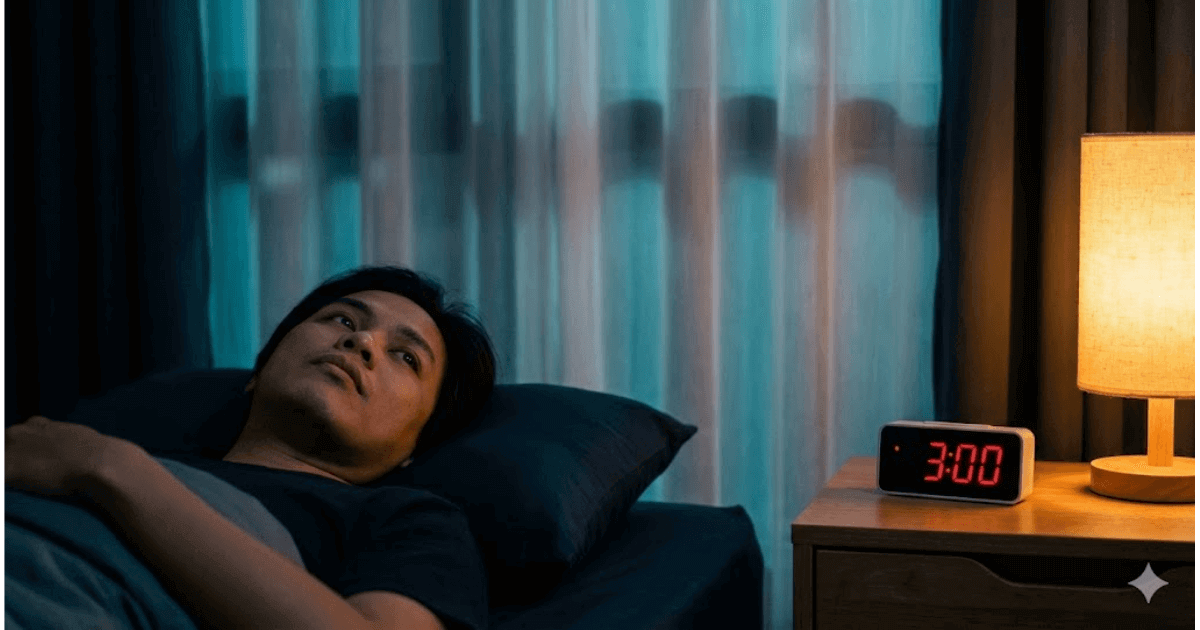
    Phone out of reach, low light, boring routine. If you wake at 3AM, use the reset routine.

  6. 6

    Track 3 signals

    Focus (AM), sleep quality (night), and kabog/jitters episodes. If symptoms persist or feel unsafe, consult a clinician.

Checklist infographic showing a daily clarity protocol: light, water, food, movement, caffeine cutoff, wind-down, sleep
Clarity is built, not forced.

Most people improve “lutang” faster when they fix the loop first: sleep boundary + caffeine timing + less stimulation at night. After the basics are consistent, optional support becomes clearer and safer.

Optional: “nervous system support” (non-medical)

KeepCalm is positioned as a “nervous system balancer” (not a knock-out sleeping pill). For product-specific ingredients and safety notes, read: KeepCalm Review Philippines (2026).

Safety note: If you’re pregnant/breastfeeding, under 18, or taking prescription meds, consult a clinician before starting any supplement.

Bottom line

“Lutang” is often a recoverable signal: you need better inputs (sleep timing, light, food, movement) and fewer late-night stress triggers. Start with the clarity protocol for 7 days, then decide what additional support you actually need.

Frequently Asked Questions

Ano ibig sabihin ng “lutang” o brain fog?
It’s a broad feeling (low focus, slow thinking, forgetfulness). Many factors can contribute—sleep debt and stress are common drivers.
Normal ba maging lutang pag puyat?
Many people feel worse focus after poor sleep. Sleep deprivation can impair next-day performance. If it’s persistent, address sleep and consult a clinician if needed.
Can coffee make brain fog worse?
If coffee disrupts your sleep or triggers jitters/kabog, it can keep the loop going. Dose and timing matter.
Ano fastest routine kapag lutang ako ngayon?
Light + water + food + movement. Then protect tonight’s sleep window and reduce late-night stimulation.
Kailan dapat magpatingin?
If symptoms are severe, sudden, or feel unsafe, seek medical help. If “lutang” is persistent and affecting daily life, consult a clinician.

References

  1. [1] Sleep disorders and cognitive function (overview of reviews/meta-analyses) Source (Accessed: 2026-02-03)
  2. [2] Sleep deprivation and neurobehavioral/cognitive performance (systematic review) Source (Accessed: 2026-02-03)
  3. [3] Caffeine effects on subsequent sleep (systematic review/meta-analysis) Source (Accessed: 2026-02-03)
  4. [4] Caffeine intake and anxiety (meta-analysis) Source (Accessed: 2026-02-03)
  5. [5] Chest pain: first aid (when to seek urgent care) Source (Accessed: 2026-02-03)
View Official KeepCalm Offer