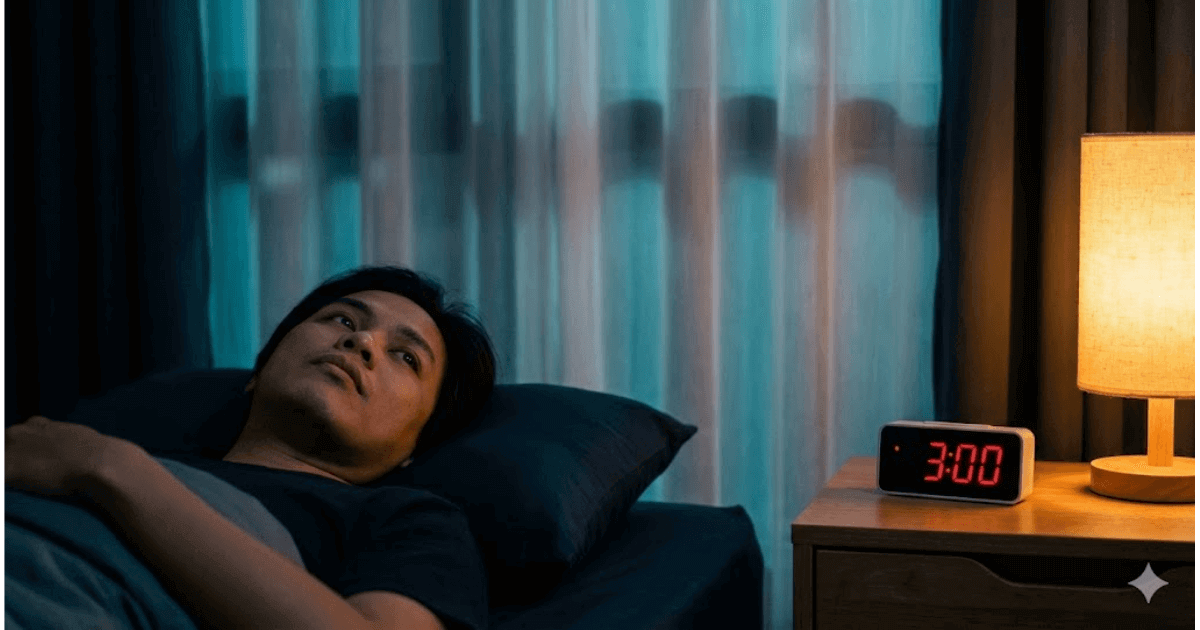
Filipino professional (late 30s) in a cozy kitchen, coffee maker in background, placing a smaller cup next to a glass of water, relaxed posture.

Kabog ng Dibdib Pagkatapos Uminom ng Kape? Here’s the “Caffeine Reset” (Taglish PH)

Sometimes caffeine doesn’t feel like “energy”—it feels like anxiety. This guide shows what to do today and how to run a 7‑day reset without dramatic guesses.

3 min read

Quick answer (TL;DR)

Kung nagkakape ka tapos biglang kabog ang dibdib, nanginginig, o parang anxious—hindi ibig sabihin “mahina ka.” For some people, caffeine can mimic anxiety symptoms (jitters, palpitations, over-alert mind). Sensitivity and timing matter. Some evidence also links higher caffeine intake with increased anxiety symptoms in some populations. [1]

First rule: if symptoms feel severe or scary, choose safety. If you have severe chest pain/pressure, fainting, severe shortness of breath, or you feel like it’s an emergency—seek urgent medical care. [4]

What to do today

  • Stop adding more caffeine.

  • Hydrate and slow your breathing (long exhale).

  • Do a simple reset: reduce stimulation (phone doomscrolling) + low light.

If you want the full product breakdown (ingredients, safety, who should avoid), read: KeepCalm Review Philippines (2026).

Filipino office worker holding a cup of coffee with subtle hand jitters and a concerned but calm expression
Sometimes caffeine feels like “focus.” Sometimes it feels like “panic.”

Bakit minsan “energy” ang kape… minsan “anxiety”?

Caffeine is a stimulant. For many people it’s fine. For others, it can trigger a “wired” feeling: kabog, jitters, racing thoughts. [1]

1) Dose + sensitivity

May mga tao na okay sa 1–2 cups. May iba na sensitive—kahit maliit na amount, mabilis na ang tibok at over-alert ang utak. Moderation helps, but personal sensitivity matters. [5]

2) Timing (especially kung puyat)

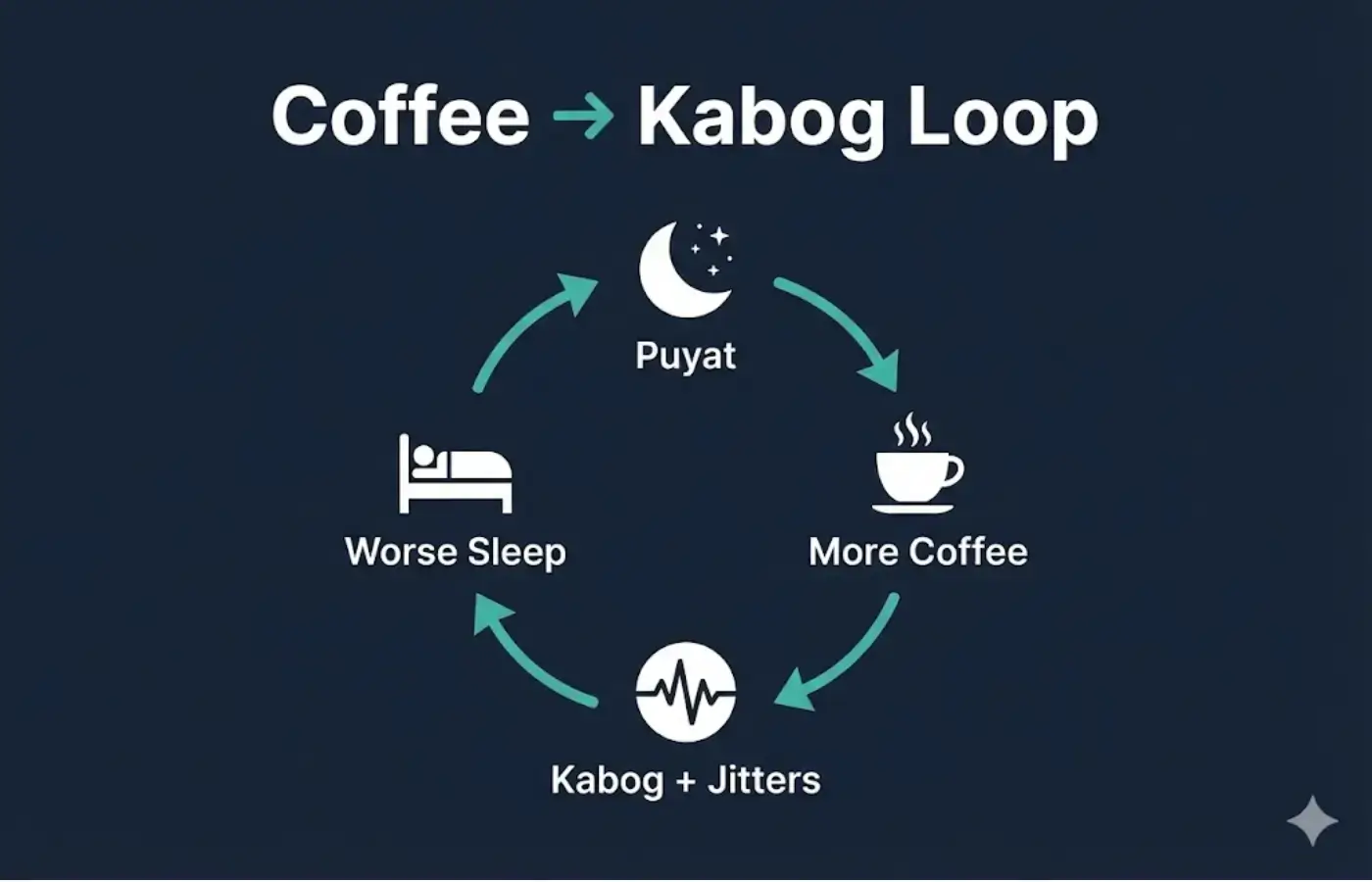
If you’re sleep-deprived, your body is already stressed. Adding caffeine can make the “tired but wired” loop worse. Caffeine can also disrupt later sleep, which creates the same cycle the next day. [3]

3) Empty stomach + stress stack

Some people feel worse if they drink coffee on an empty stomach or while already anxious. Try moving coffee after food and reducing the dose first.

4) When to get checked

Palpitations have many causes. Caffeine is only one possible trigger. If palpitations are frequent, severe, or come with red-flag symptoms, consult a clinician. [5]

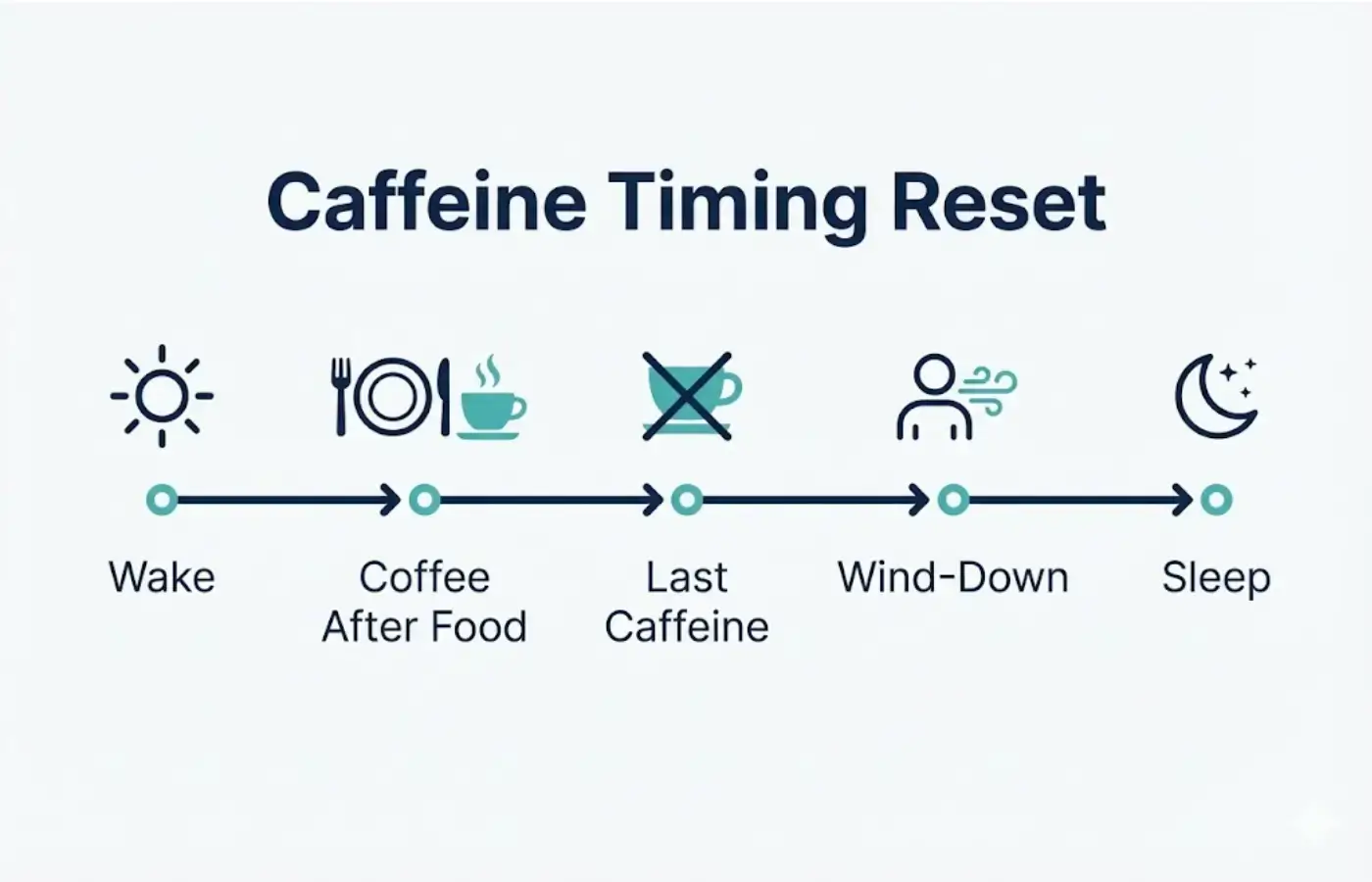
Timeline infographic showing coffee timing, caffeine cutoff, and sleep window to reduce “tired but wired”
Timing beats willpower.

What to do today + the 7‑Day “Caffeine Reset” Experiment

  1. 1

    Today: pause the caffeine escalation

    If you already feel kabog/jitters, don’t add another cup. Hydrate and lower stimulation.

  2. 2

    Check the red flags

    If you have severe chest pain/pressure, fainting, severe shortness of breath, or it feels like an emergency, seek urgent care. [4]

  3. 3

    Day 1–2: delay the first cup

    Try moving coffee later (after food). If you’re sensitive, reduce the amount (half cup / weaker brew).

  4. 4

    Day 3–4: set a caffeine cutoff

    Pick a cutoff time so sleep isn’t sabotaged. If your sleep gets worse after coffee, move the cutoff earlier. [3]

  5. 5

    Day 5–7: switch to “gentler” options

    Try half-caf, smaller servings, or decaf. Your goal is calm energy, not adrenaline.

  6. 6

    Track 3 signals

    Kabog episodes, sleep quality, and overthinking intensity. If symptoms persist or feel unsafe, consult a clinician.

Clean minimalist infographic, dark navy background with teal and white accents. Title text (exact): “Coffee → Kabog Loop”. Show a simple 4-step loop with arrows and short labels (exact): “Puyat”, “More Coffee”, “Kabog + Jitters”, “Worse Sleep”

How to break the “kape → kabog → puyat → more coffee” loop

If coffee is triggering kabog + overthinking, your next best move is to reduce the loop first (timing + dose + sleep boundary). Then, optional support becomes clearer and safer.

Optional: “nervous system support” (not a substitute for medical care)

After you’ve improved the basics (sleep boundary + caffeine timing), some people explore non-medical sleep/stress support. KeepCalm is positioned as a “nervous system balancer” (not a knock-out sleeping pill). For product-specific safety notes and ingredients, read: KeepCalm Review Philippines (2026).

Safety note: If you’re pregnant/breastfeeding, under 18, or taking prescription meds, consult a clinician before starting any supplement.

Bottom line

Kung coffee makes you kabog, you don’t need more willpower—you need a better system: dose, timing, and sleep protection. Start with a 7‑day reset. If symptoms are frequent, severe, or scary, choose safety and consult a clinician.

Frequently Asked Questions

Normal ba ang kabog ng dibdib pagkatapos uminom ng kape?
Caffeine can trigger palpitations/jitters in some people, especially if sensitive or sleep-deprived. If symptoms are severe, frequent, or come with red flags, consult a clinician.
Bakit parang anxious ako after coffee?
Caffeine is a stimulant and can mimic anxiety-like symptoms in some people. Dose and timing matter.
Ano ang safest gawin kapag kabog na?
Stop adding caffeine, hydrate, do slow breathing, reduce stimulation, and choose urgent care if symptoms feel severe or scary.
Anong oras dapat caffeine cutoff?
It varies. If caffeine disrupts your sleep, move the cutoff earlier and track your sleep quality.
May supplement ba para sa tired-but-wired?
Some people explore sleep/stress support only after improving the basics and reviewing safety notes. Consult a clinician if on medications or with conditions.
Saan ko makikita ang KeepCalm full details?
Read the full breakdown here: /reviews/keepcalm-review

References

  1. [1] Caffeine intake and anxiety (meta-analysis) Source (Accessed: 2026-02-03)
  2. [2] Caffeine and panic/anxiety sensitivity (systematic review/meta-analysis; panic disorder populations) Source (Accessed: 2026-02-03)
  3. [3] Caffeine effects on subsequent sleep (systematic review/meta-analysis) Source (Accessed: 2026-02-03)
  4. [4] Chest pain: first aid (when to seek urgent care) Source (Accessed: 2026-02-03)
  5. [5] Heart palpitations (diagnosis/treatment; caffeine as possible trigger) Source (Accessed: 2026-02-03)
  6. [6] Caffeine and heart disease (moderation guidance) Source (Accessed: 2026-02-03)
View Official KeepCalm Offer