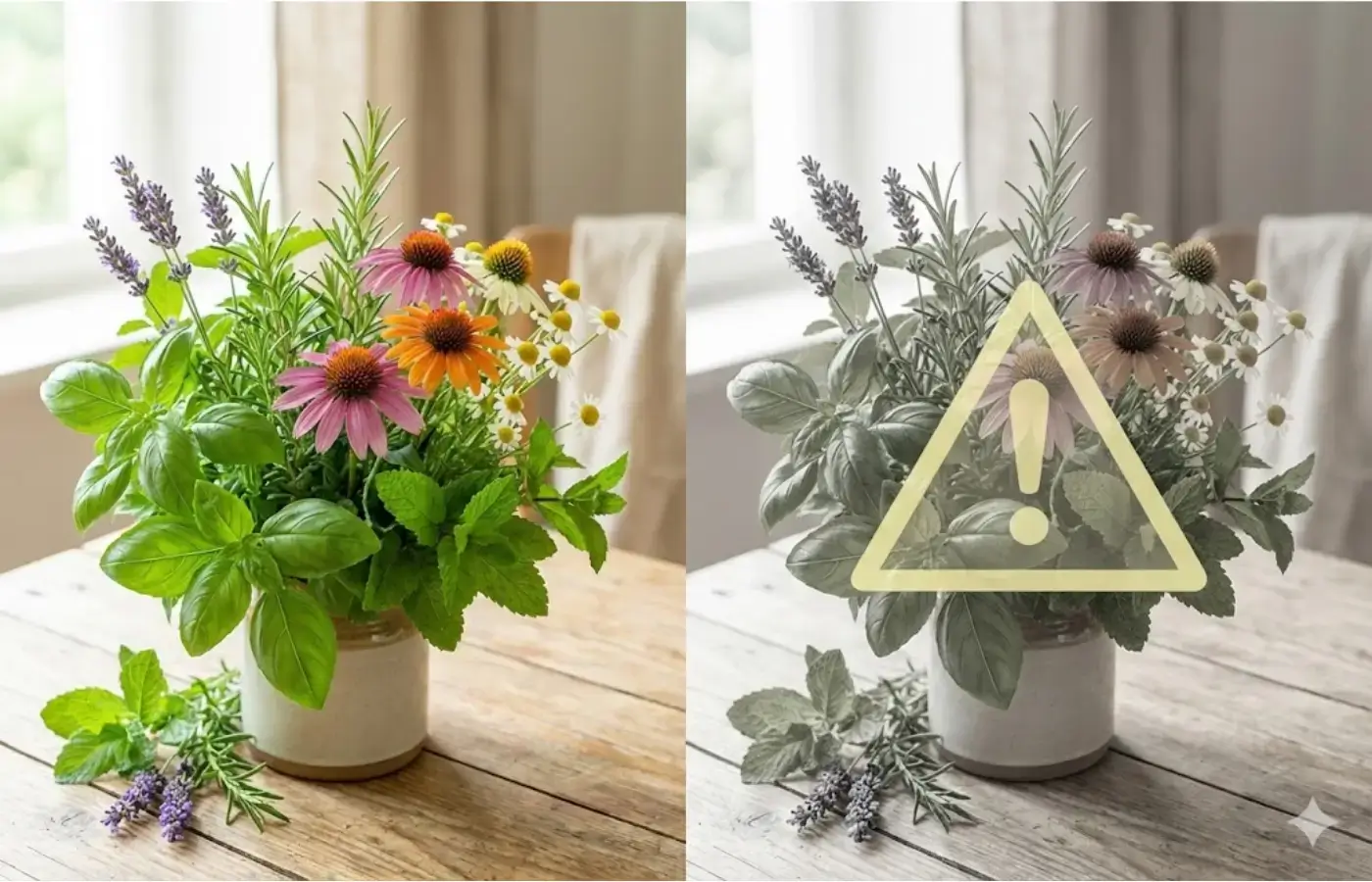
Beautiful herbs and plants with caution warning overlay

"Natural" Doesn't Mean "Safe for Everyone"

Arsenic is natural. So is poison ivy. Just because something comes from nature doesn't guarantee it's safe for your body. Here's what you need to know about herbal supplement safety.

4 min read

Quick Answer (TL;DR)

The belief that "natural = safe" is one of the most dangerous assumptions in health and wellness.

  • Natural substances can have side effects (just like medications)
  • Herbal products can interact with medications (sometimes dangerously)
  • Some people should avoid certain herbs entirely (pregnancy, liver disease, etc.)
  • Natural products are less regulated than pharmaceuticals

The bottom line

"Natural" means it comes from nature. It does NOT mean:

  • ❌ No side effects
  • ❌ Safe for everyone
  • ❌ No interactions with medications
  • ❌ FDA-approved or verified

Approach herbal supplements with the same caution you'd give to any health product.
Bakit Naniniwala Tayo na "Natural = Safe"?

Marketing influences us

Supplement marketing uses words like "pure," "organic," "plant-based," and "nature's gift" to create a mental shortcut: nature = good, chemicals = bad.

Cultural traditions

In the Philippines (and many cultures), herbal remedies have been used for generations. "Lola's recipe" feels trustworthy because it's familiar and traditional.

Fear of synthetic medications

Many people worry about pharmaceutical side effects. Natural alternatives seem like a "safer" choice—even when they're not.

The logical error

The assumption: "This comes from a plant / nature / the Bible, so it can't harm me."

The reality: Toxicity is about the substance and the dose, not the origin.

  • Arsenic? Natural.
  • Poison ivy? Natural.
  • Hemlock (killed Socrates)? Natural.
  • Opium? Natural.
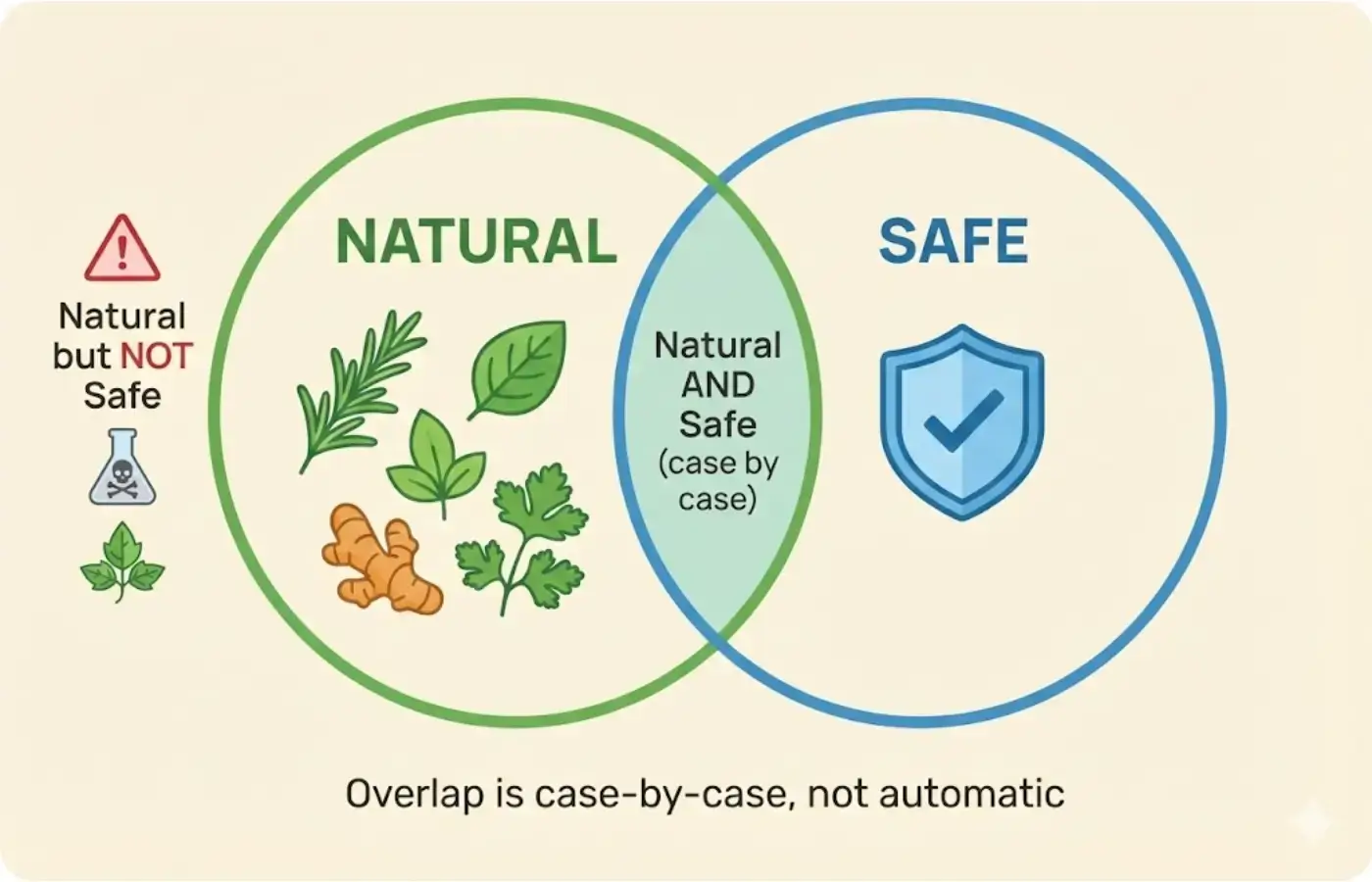
Venn diagram showing natural and safe as overlapping, not identical circles
Natural and Safe are not the same thing.

5 Reasons Why "Natural" Can Still Be Risky

1. Natural substances have active compounds

Herbs contain bioactive chemicals—that's why they "do something." But "doing something" means they can also cause unwanted effects. Digitalis (foxglove) is "natural" and can stop your heart.

2. Herbs can interact with medications

Many natural substances affect the same pathways as medications. Garlic + blood thinners = bleeding risk. Cinnamon + diabetes meds = hypoglycemia risk [1][2].

3. Some people are more vulnerable

  • Pregnant women: Many herbs can affect pregnancy (parsley, aloe vera)
  • People with liver/kidney disease: Can't process substances normally
  • Elderly: More medications, slower metabolism
  • Children: Bodies process things differently

4. Dosage is harder to control

Pharmaceutical drugs are standardized—each pill has the same amount. Herbal products can vary widely in concentration from batch to batch, brand to brand.

5. Less regulation = less oversight

In many countries (including the Philippines for some products), herbal supplements don't undergo the same rigorous testing as drugs. They may:

  • Contain contaminants
  • Have inconsistent dosages
  • Include unlisted ingredients
  • Make unverified claims

Real-World Examples of "Natural" Risks

Oral Aloe Vera and Liver Injury

Aloe vera is marketed as "natural" and "detoxifying." But oral aloe (especially whole-leaf or latex forms) has been linked to rare cases of liver injury [3]. Ironic for a "liver support" ingredient.

Parsley Extract and Pregnancy

Parsley is a common culinary herb, but concentrated extracts/essential oils are a very different exposure than normal food use. If you’re pregnant or breastfeeding, avoid non‑essential herbal supplements unless your OB/clinician says it’s OK [4]. For parsley specifically, avoid concentrated extracts/essential oils unless clinician‑advised [7].

Garlic + Blood Thinners / Procedures

Garlic supplements may increase bleeding risk when combined with blood thinners. If you take blood thinners or you have an upcoming procedure, tell your clinician/surgeon about all supplements you take [1][6].

Cinnamon and Liver Stress

Cassia cinnamon (the common type) contains coumarin. At high supplement doses, coumarin can stress the liver—especially in people with existing liver conditions [2].

Multi-Herb Products: Compounded Risk

When you combine 10-12 different herbal ingredients, you compound interaction risks. Each ingredient brings its own profile. It's harder to predict what will happen.

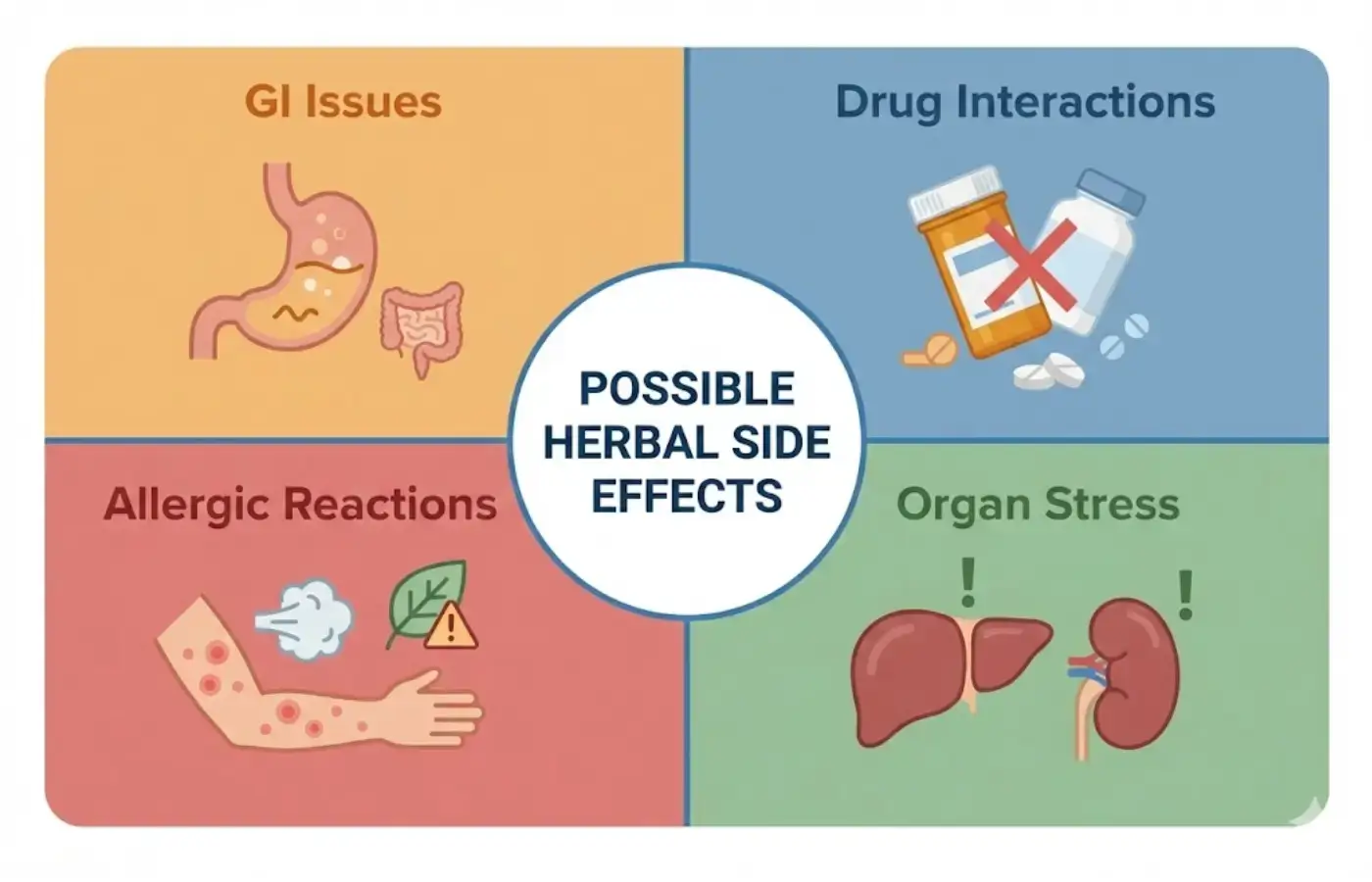
Infographic showing categories of herbal supplement side effects
Herbal supplements can cause multiple types of side effects.

How to Protect Yourself

1. Don't assume "natural = safe"

Treat herbal supplements with the same respect you'd give any substance that affects your body.

2. Research individual ingredients

Look up each ingredient using high-trust sources like NCCIH (NIH), PubMed, or your pharmacist. Not just the marketing material.

3. Tell your doctor and pharmacist

Always disclose herbal supplements you take. They can check for interactions with your medications [5][6].

4. Verify the product

Check for FDA registration (CPR number) when possible. See our FDA Verification Guide.

5. Know who should avoid

If you're pregnant, breastfeeding, on medications, or have chronic conditions—get clinician clearance before trying herbal products. See our Who Should Avoid Multi-Herb Supplements guide.

6. Start low and monitor

If you do try a product, start with the lowest suggested dose. Monitor for any reactions. Keep a log.

7. Don't replace medical care

Supplements are not treatment. They don't diagnose, treat, cure, or prevent disease. If you have symptoms, see a doctor.

Want a Real-World Example?

HolyHerbs is a 12-ingredient "natural" product. We analyzed every ingredient for evidence and safety—including risks many buyers don't consider.

Read: HolyHerbs Review Philippines (2026) — Verification + All 12 Ingredients + Safety

Frequently Asked Questions

Natural supplements safe ba?
Not automatically. "Natural" means plant-based origin, not "no side effects." Herbs can interact with meds and affect vulnerable populations.
Bakit may side effects ang herbal?
Herbs contain bioactive compounds—that's why they have effects. But "effects" can include unwanted reactions, just like medications.
Paano malalaman kung safe ang supplement?
Research ingredients using NCCIH, PubMed, or ask your pharmacist. Check FDA registration. Disclose all supplements to your doctor.
Okay lang ba na hindi sabihin sa doctor?
No. Doctors and pharmacists need to know what you take to check for interactions. Hiding supplements can lead to dangerous situations.
Ano ang pinaka-risky na "natural" ingredients?
Depends on your situation. For pregnancy: parsley, aloe. For blood thinners: garlic, turmeric, ginger. For diabetes meds: cinnamon, cumin, aloe.

References

  1. [1] NCCIH. Garlic. ` Source
  2. [2] NCCIH. Cinnamon. ` Source
  3. [3] LiverTox. Aloe Vera. ` Source
  4. [4] MotherToBaby. Herbal products in pregnancy. ` Source
  5. [5] NCCIH. Using Dietary Supplements Wisely. ` Source
  6. [6] Mayo Clinic. Herbal supplements interactions. ` Source
  7. [7] Parsley (LactMed / NCBI Bookshelf). ` -- Source
Read HolyHerbs Review