🚫 Who Should AVOID Multi-Herb Supplements?
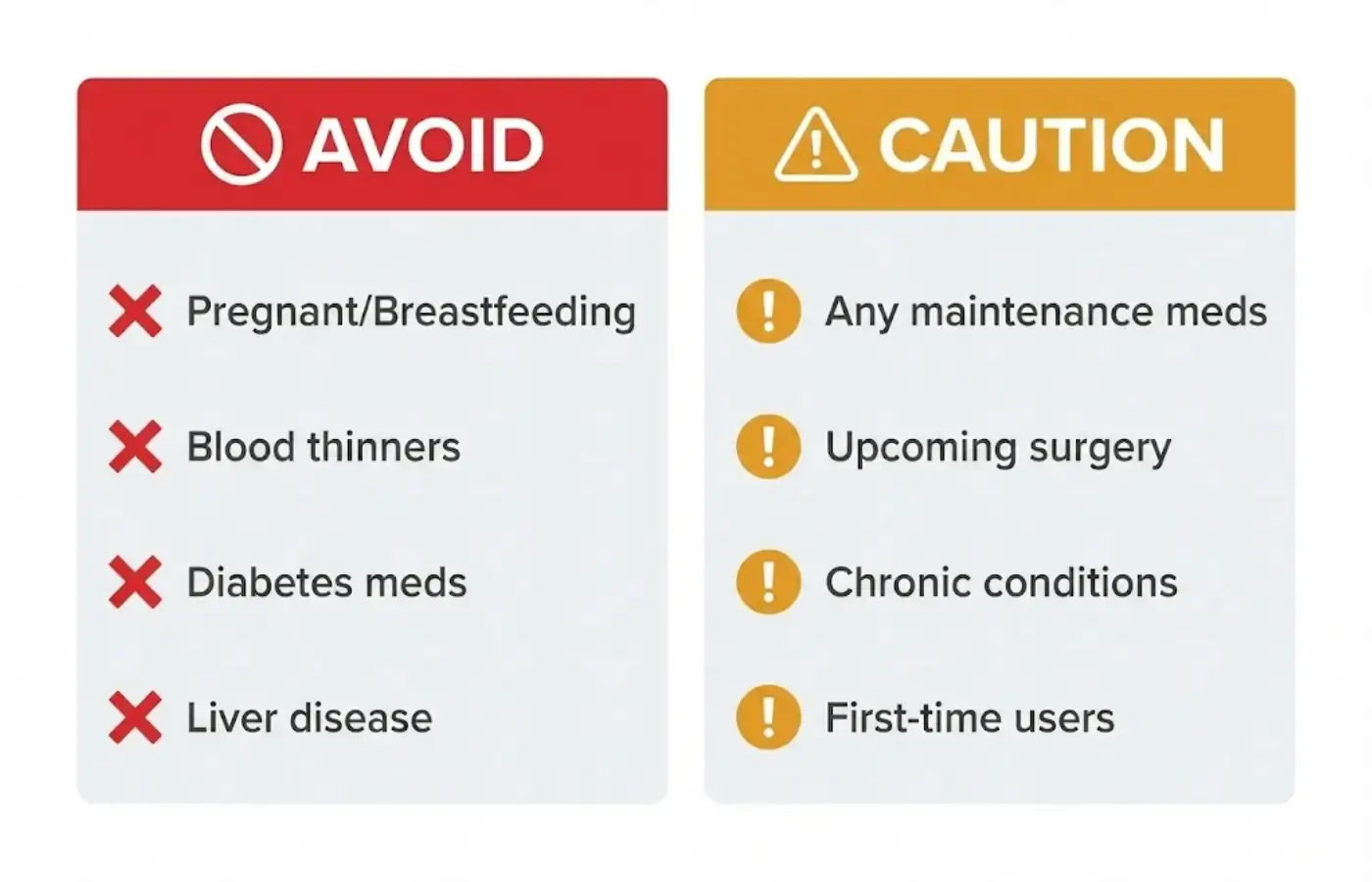
1. Pregnant or breastfeeding women
Many herbal ingredients haven't been studied well in pregnancy/breastfeeding.
Rule: Avoid non-essential herbal supplements during pregnancy/breastfeeding unless your OB/clinician explicitly approves [4].
2. People taking blood thinners
Garlic, turmeric, ginger, and grape seed have mild anti-platelet effects. Combined with blood thinners (Warfarin, Aspirin, Clopidogrel), this can increase bleeding risk [1][2].
Rule: If you take blood thinners, consult your doctor before starting any herbal supplement.
3. People taking diabetes medications
Cinnamon, aloe vera, cumin, and other "blood sugar support" herbs may lower glucose. Combined with diabetes meds, this can cause hypoglycemia (dangerously low blood sugar).
Rule: Monitor blood sugar closely and consult your clinician. You may need medication adjustment.
4. People with liver disease
The liver processes most herbal compounds. If your liver is already compromised, adding multiple herbal ingredients can increase stress. Some herbs (like oral aloe vera) have rare liver injury reports [3].
Rule: If you have hepatitis, cirrhosis, fatty liver, or other liver conditions, avoid multi-herb products without clinician approval.
5. People with kidney disease
The kidneys filter many herbal compounds. Impaired kidney function can lead to accumulation and toxicity.
Rule: If you have kidney disease, consult a nephrologist before taking herbal supplements.