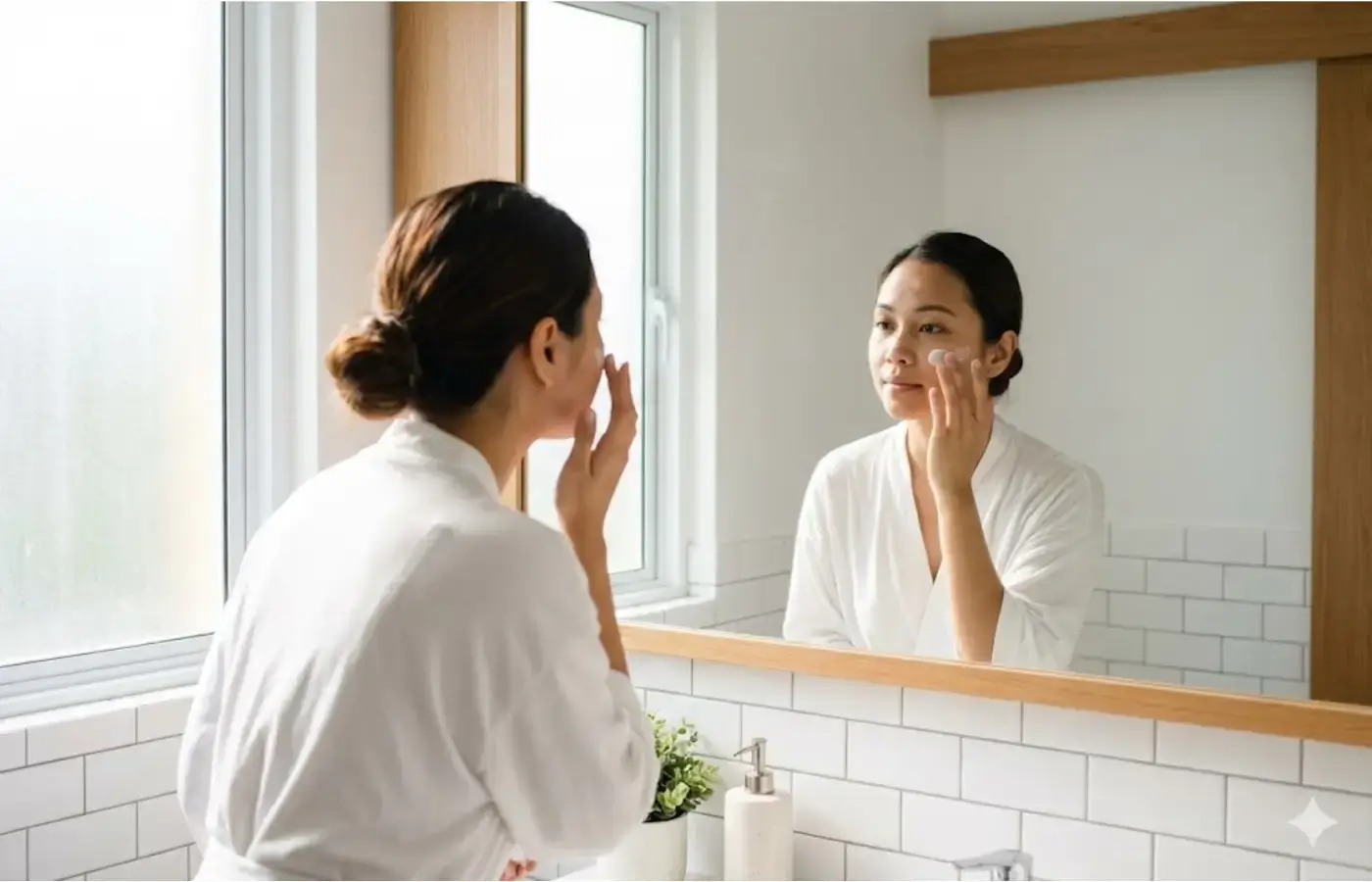
Person applying sunscreen as part of morning skincare routine

Sunscreen + Exfoliating Products = Non-Negotiable

Using a rejuv set, peeling cream, or any AHA/BHA/retinoid? Without daily sunscreen, you're risking more damage than improvement. Here's what you need to know.

3 min read

Quick Answer (TL;DR)

If you're using any exfoliating product (rejuv sets, peeling creams, AHAs, BHAs, retinoids), your skin is more vulnerable to UV damage:

  • Exfoliation removes the outer layer of skin, reducing natural protection
  • UV exposure on exfoliated skin = increased risk of sunburn, hyperpigmentation, dark spots
  • All that peeling can backfire if sun damage undoes your progress

The rule

Daily sunscreen (SPF 30+ broad-spectrum) is mandatory when using exfoliating products. This is not optional [1].

  • Apply every morning (even if cloudy, even if indoors near windows)
  • Reapply if going outdoors for extended periods
  • Choose a formula you'll actually use (texture matters)
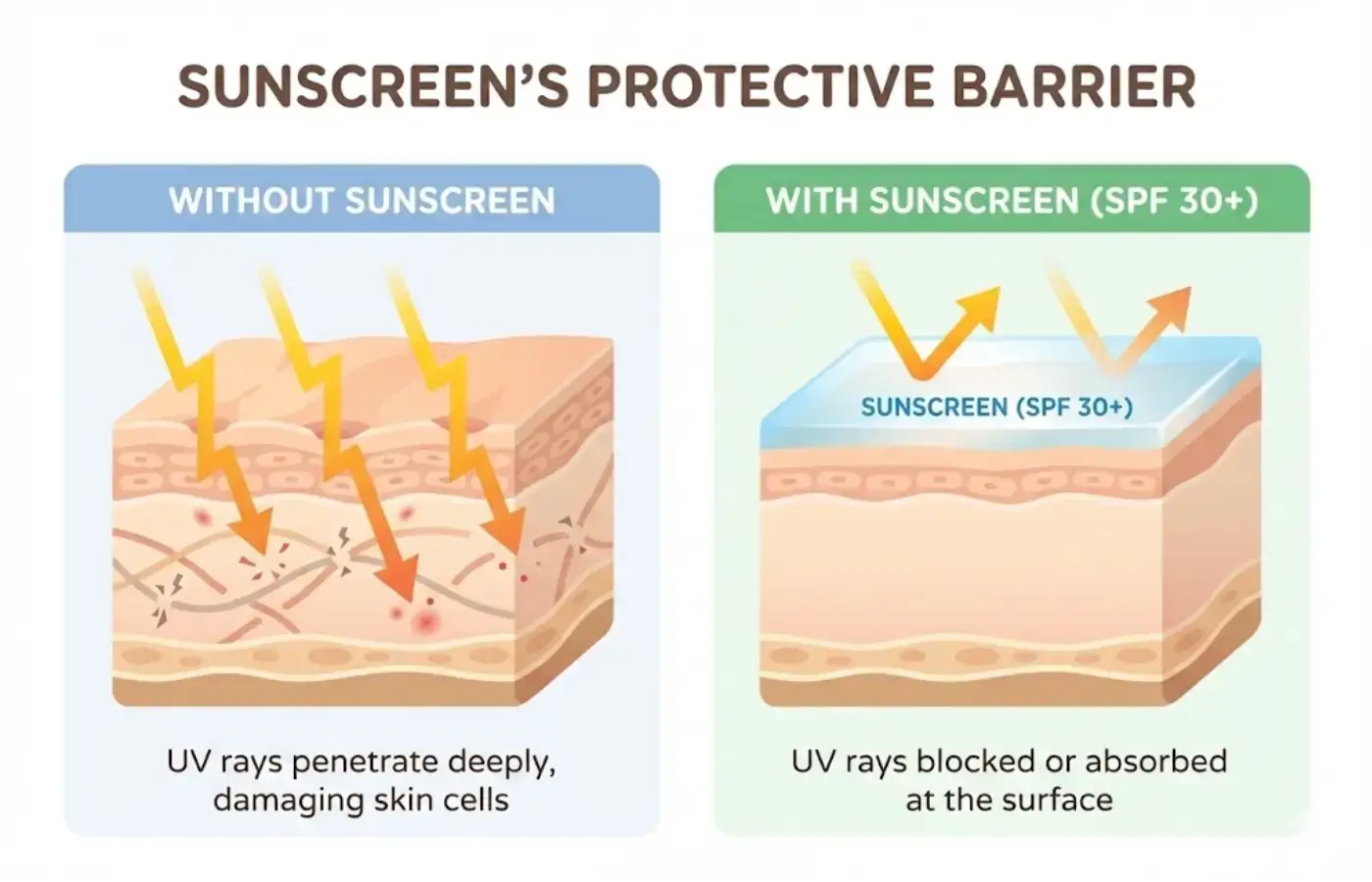
Diagram showing UV rays penetrating exfoliated skin vs protected skin
Exfoliated skin is more vulnerable — sunscreen creates a shield.

Why Exfoliation Makes Skin More Vulnerable

The science (simplified)

Your skin's outer layer (stratum corneum) acts as a natural UV barrier. When you exfoliate — chemically (acids, retinoids) or physically (peeling creams) — you're removing this protective layer faster than usual.

What happens without sunscreen

  • Increased UV penetration — more UV reaches deeper skin layers
  • Sunburn risk — exfoliated skin burns faster
  • Hyperpigmentation — UV triggers melanin production → dark spots
  • Post-inflammatory hyperpigmentation (PIH) — especially for darker skin tones
  • Undoing your progress — you peel to improve skin, then sun damage makes it worse

The irony

Many people use peeling products to improve skin appearance (dark spots, uneven tone). But skipping sunscreen while exfoliating creates MORE dark spots. It's self-sabotage.

Ano ang Dapat Hanapin sa Sunscreen?

According to the American Academy of Dermatology [1]:

SPF 30 or higher

  • SPF 30 blocks about 97% of UVB rays
  • Higher SPF (50+) offers slightly more protection, but SPF 30 is the minimum
  • No sunscreen blocks 100%

Broad spectrum

  • Protects against both UVA and UVB
  • UVA = aging, pigmentation. UVB = burning.
  • You need protection from both

PA rating (for Asian sunscreens)

  • PA+++ or PA++++ indicates strong UVA protection
  • Common in Japanese/Korean sunscreens
  • Higher PA = more UVA protection

Water resistant (optional but useful)

  • If you sweat a lot or are outdoors, water-resistant formulas last longer
  • Still need to reapply after swimming or heavy sweating

Texture you'll actually use

The best sunscreen is the one you'll wear consistently. If you hate thick, greasy formulas, try gel or fluid types. If your skin is dry, cream formulas add moisture.

Paano Mag-Apply ng Sunscreen Correctly

  1. 1

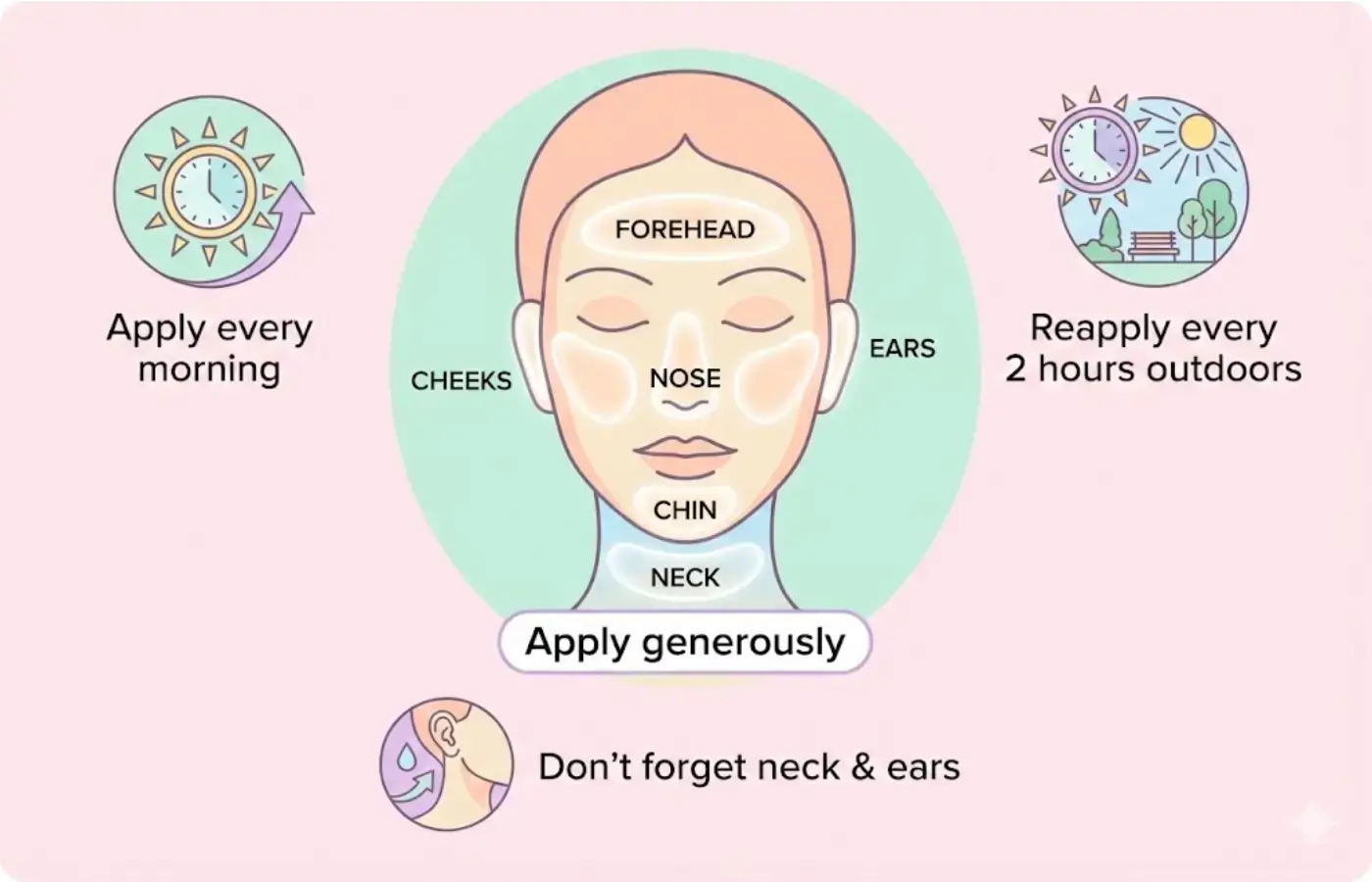
    Apply generously

    Most people under-apply. Use enough to fully cover your face and neck evenly.

  2. 2

    Apply to all exposed areas

    Don't forget ears, neck, back of hands. Anywhere sun touches.

  3. 3

    Apply as last step of skincare (before makeup)

    After moisturizer. Let it absorb for a minute before makeup.

  4. 4

    Apply 15-30 minutes before sun exposure

    If going outside, apply before you leave.

  5. 5

    Reapply every 2 hours if outdoors

    More often if sweating or swimming.

  6. 6

    Don't rely on makeup SPF alone

    SPF in foundation/BB cream is usually not enough coverage on its own.

  7. 7

    Even indoors if near windows

    UVA rays penetrate glass. If you're by a window all day, wear sunscreen.

Visual guide showing proper sunscreen application amount and areas
Apply generously and cover all exposed areas (face, neck, ears).

Common Excuses (At Bakit Mali)

"Pero nasa bahay lang ako"

Counter: UVA rays penetrate windows. If you're near a window, UV is reaching you. Exfoliated skin is extra vulnerable.

"Maulap naman"

Counter: UV rays can still reach you even on cloudy days. Overcast doesn't mean zero UV exposure.

"Heavy and greasy ang sunscreen"

Counter: Modern formulas (gel, fluid, matte-finish) are lightweight. Try different textures until you find one you like.

"May SPF naman ang foundation ko"

Counter: Makeup SPF is usually not applied thick enough for full protection. Use actual sunscreen underneath.

"Mahal ang sunscreen"

Counter: Affordable options exist (local and drugstore brands). Even an inexpensive SPF 30 is better than none.

"Di naman ako magba-beach"

Counter: Daily UV exposure adds up. You don't need a beach trip to accumulate sun damage.

Frequently Asked Questions

Kailangan ba ng sunscreen kahit nasa bahay lang?
Yes, if you're near windows. UVA rays penetrate glass. If using exfoliating products, even indoor UV exposure matters.
Ano ang SPF 30?
SPF 30 blocks about 97% of UVB rays. It's the minimum recommended by dermatologists. Higher SPF offers slightly more protection.
Ano ang broad spectrum?
It means the sunscreen protects against both UVA and UVB rays. UVA causes aging and pigmentation; UVB causes burning.
Gaano kadalas mag-reapply?
Every 2 hours if outdoors. More often if sweating or swimming. Indoor use (near windows) may not need reapplication as frequently.
Pwede bang gamitin ang sunscreen muna bago moisturizer?
Standard order is: skincare (serum, moisturizer) → sunscreen → makeup. Sunscreen is the last skincare step before makeup.
May sunscreen ba na hindi nagpapataba sa mukha?
Yes. Look for gel, fluid, or matte-finish formulas. Asian sunscreens (Japanese, Korean) often have lightweight textures.

This article is for educational purposes. Sunscreen recommendations are based on AAD guidelines [8]. Individual needs may vary. Consult a dermatologist for personalized advice.

References

  1. [1] AAD: How to select sunscreen. ` -- Source (Accessed: 2026-02-06)
Read Skin21 Review