Close-up of person touching face gently during skincare routine

Micro-Peeling: Ano ang Asahan?

First time using an exfoliating product? Yes, peeling is expected — but here's what's normal, what's not, and how to get through the shedding phase safely.

3 min read

Quick Answer (TL;DR)

If you're using products that contain exfoliating ingredients (acids, retinoids, peeling creams), some skin shedding is expected:

  • Week 1: Skin may feel tight, dry, slightly red. Mild flaking begins (especially around nose, chin).
  • Week 2: Peeling intensifies. Sheets of thin skin may come off. This is normal.
  • Week 3-4: Peeling subsides. Skin starts to look smoother (if all goes well).

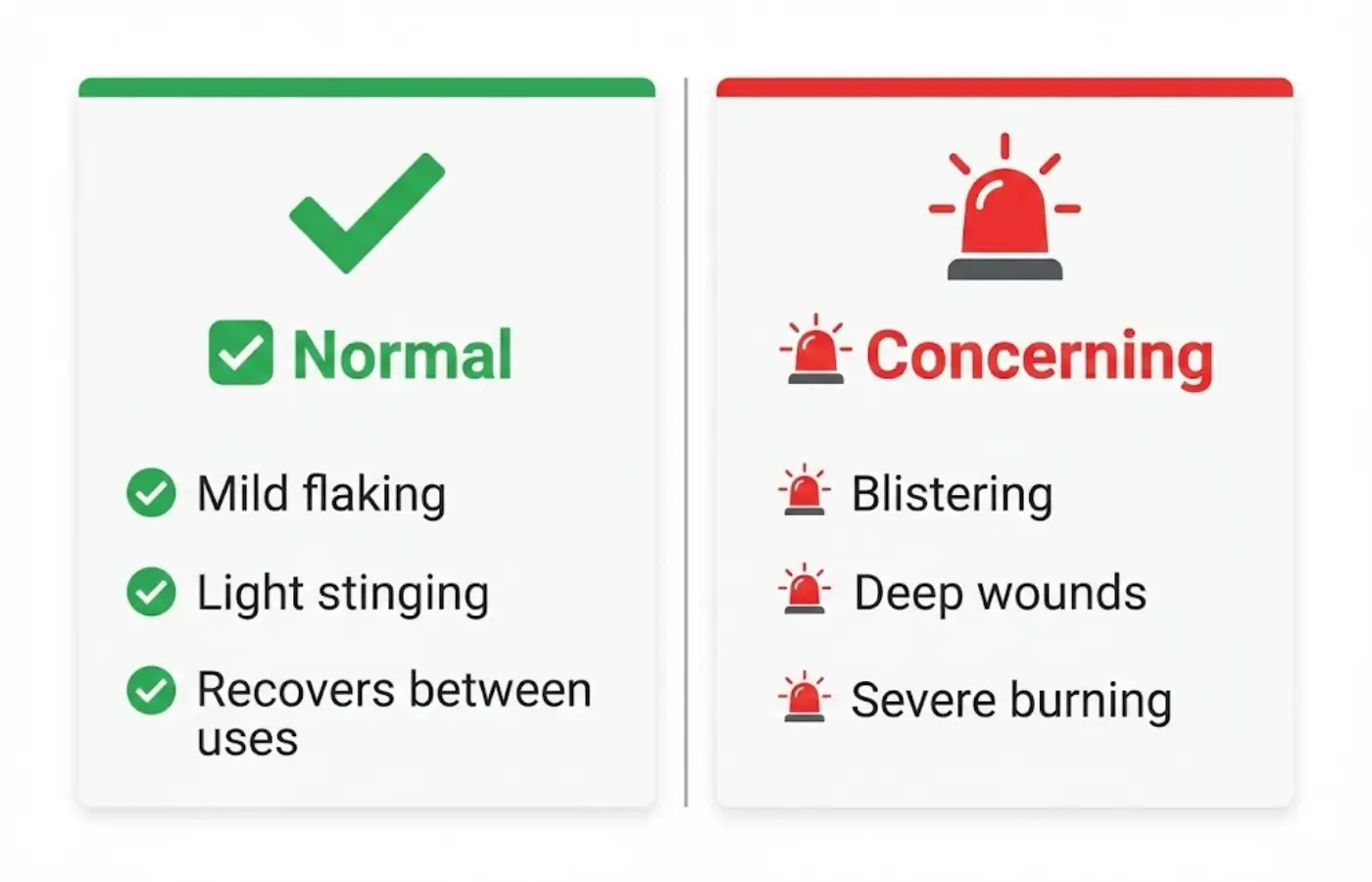
⚠️ What's NOT normal:

  • Deep open wounds or bleeding
  • Blistering
  • Severe burning that doesn't subside
  • Widespread swelling
  • Signs of infection (pus, spreading redness)

If you experience any of these, stop immediately and consult a dermatologist.
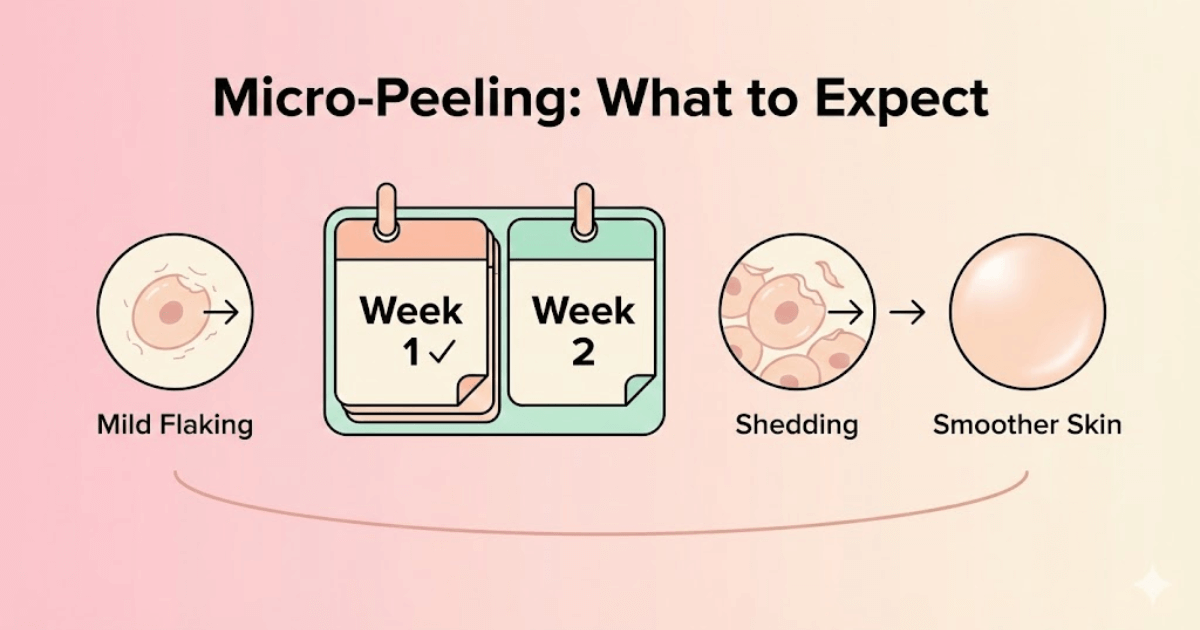
Timeline showing Week 1 adjustment, Week 2 peeling, Week 3-4 recovery
What to expect: a typical peeling timeline.

Week 1: Adjustment Phase

What's happening

Your skin is adjusting to the exfoliating ingredients. Cell turnover is accelerating, meaning old skin cells are being pushed to the surface faster than usual.

What to expect

  • Dryness and tightness — skin may feel less hydrated at first
  • Mild redness — especially after application
  • Light flaking — usually around T-zone (nose, forehead, chin)
  • Slight stinging — when applying products (should fade quickly)

What to do

  • Keep using gentle moisturizer
  • Apply sunscreen every morning (SPF 30+) — non-negotiable [2]
  • Don't pick at flaking skin (let it shed naturally)
  • Reduce frequency if too intense (e.g., every other day)

Week 2: Peak Peeling

What's happening

This is usually when peeling is most visible. The accelerated cell turnover means more dead skin is being shed.

What to expect

  • Visible peeling — thin sheets of skin may come off, especially around cheeks, forehead
  • Flakiness — skin may look patchy or dry in areas
  • Some sensitivity — skin is more vulnerable right now
  • Possible "looking worse before better" — this is the ugly phase

What to do

  • Continue gentle cleansing and moisturizing
  • Don't skip sunscreen (even indoors if near windows) [2]
  • Avoid picking or pulling at peeling skin — risk of scarring
  • Avoid makeup that emphasizes flakes (or use minimal)
  • Stay hydrated (drink water, use humidifier if AC is drying)

When to be concerned

If peeling is so severe you have open wounds, or if you see blistering, stop the product and see a dermatologist.

Comparison of normal peeling signs vs concerning signs
Know when peeling is normal and when to stop.

Dos and Don'ts During Peeling Phase

✅ DO

  • Apply sunscreen daily — SPF 30+ broad-spectrum, reapply if outdoors [2]
  • Moisturize — gentle, fragrance-free formula
  • Be patient — the ugly phase is temporary (usually 1-2 weeks)
  • Let skin rest at night — apply moisturizer after products absorb
  • Keep routine simple — avoid adding new actives during peeling

❌ DON'T

  • Don't pick or peel manually — increases scarring/PIH risk
  • Don't skip sunscreen — exfoliated skin is more vulnerable to UV
  • Don't over-exfoliate — using too many products = barrier damage
  • Don't use harsh scrubs — physical exfoliation on peeling skin is too aggressive
  • Don't go out in direct sun — if you must, reapply SPF frequently

Kailan Dapat Itigil at Magpa-Derma?

🚨 Stop immediately if you experience:

  • Blistering or open wounds
  • Severe burning that doesn't subside even without product
  • Widespread swelling (especially around eyes/lips)
  • Signs of infection — pus, increasing redness, warmth
  • Skin doesn't recover between applications

See a dermatologist if:

  • You're unsure if your reaction is normal
  • Peeling/irritation continues past 3-4 weeks without improvement
  • You develop pigmentation changes (darkening) after stopping [3]

Peeling from cosmetic products should not leave you with wounds. If it does, the product may be too strong for you, or you may have a sensitivity.

Related: Hapdi After Rejuv? Barrier Repair Guide

Frequently Asked Questions

Normal lang ba mag-peel sa rejuv set?
Yes, if you're using exfoliating products. Mild to moderate flaking is expected, especially in weeks 1-2. Deep wounds or blistering are NOT normal.
Gaano katagal ang peeling phase?
Usually 1-2 weeks of visible peeling. By week 3-4, skin should be calmer. If it continues, reassess the product or see a derm.
Pwede bang butasin ang balat na nagba-flake?
No. Let it shed naturally. Picking increases risk of scarring and hyperpigmentation.
Kailangan ba ng sunscreen kahit nasa bahay lang?
Yes, especially if near windows. UV rays penetrate glass. Exfoliated skin is extra vulnerable to sun damage.
Ano ang "ugly phase"?
The period (usually week 2) when skin looks worse — flaky, patchy, red — before it starts looking better. It's temporary.

This article is for educational purposes. Results vary by individual. If you have severe or prolonged reactions, consult a board-certified dermatologist.

References

  1. [1] AAD: How to test skincare products (patch test). ` Source
  2. [2] AAD: How to select sunscreen. ` Source
  3. [3] AAD: 9 things when acne won't clear. ` -- Source
Read Skin21 Review