
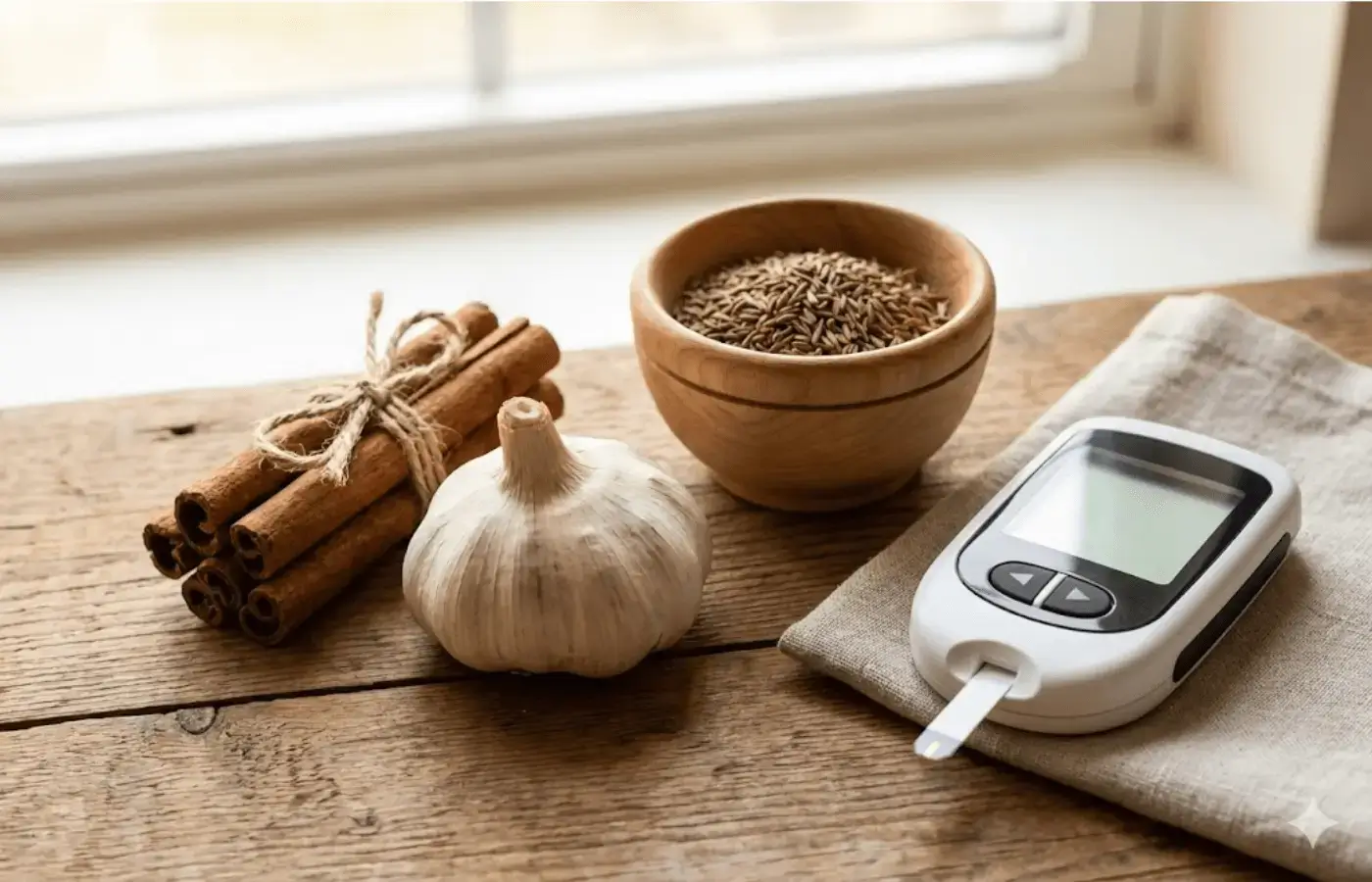
Cinnamon sticks, garlic, and cumin seeds with blood glucose meter

Blood Sugar Herbs: Cinnamon, Garlic, Cumin

These herbs are commonly marketed for blood sugar support. But what does the research actually say? No miracle claims—just evidence and safety.

4 min read

Quick Answer (TL;DR)

Several herbs are marketed for "blood sugar support." Here's the reality:

  • Cinnamon: Some studies suggest modest effects on fasting glucose. Evidence is mixed—not strong enough to replace diabetes medications [2].
  • Garlic: More studied for cardiovascular effects than blood sugar. Some studies suggest modest influence [1].
  • Cumin: Limited studies suggest possible effects on lipid and glucose profiles. Evidence is preliminary.

⚠️ Critical safety warning

If you take diabetes medications (Metformin, Glimepiride, Insulin, etc.), these herbs may add to blood sugar-lowering effects and cause hypoglycemia (dangerously low blood sugar).

Never stop or adjust your medications without doctor guidance. Supplements are not treatment.
Ano ang "Blood Sugar Support"?

What marketers want you to think

  • This supplement will lower your blood sugar
  • It will help you control diabetes naturally
  • You might be able to reduce or stop your medications

What the science actually says

  • Some herbs have shown modest effects on blood glucose in studies
  • Effects (if any) are usually small compared to medications
  • Studies often have limitations (small sample sizes, short duration)
  • Individual responses vary widely

What you need to know

If you have diabetes or prediabetes:

  • Supplements are not treatment
  • They may complement (not replace) diet, exercise, and medications
  • Always monitor your blood sugar levels
  • Always tell your doctor about supplements you take
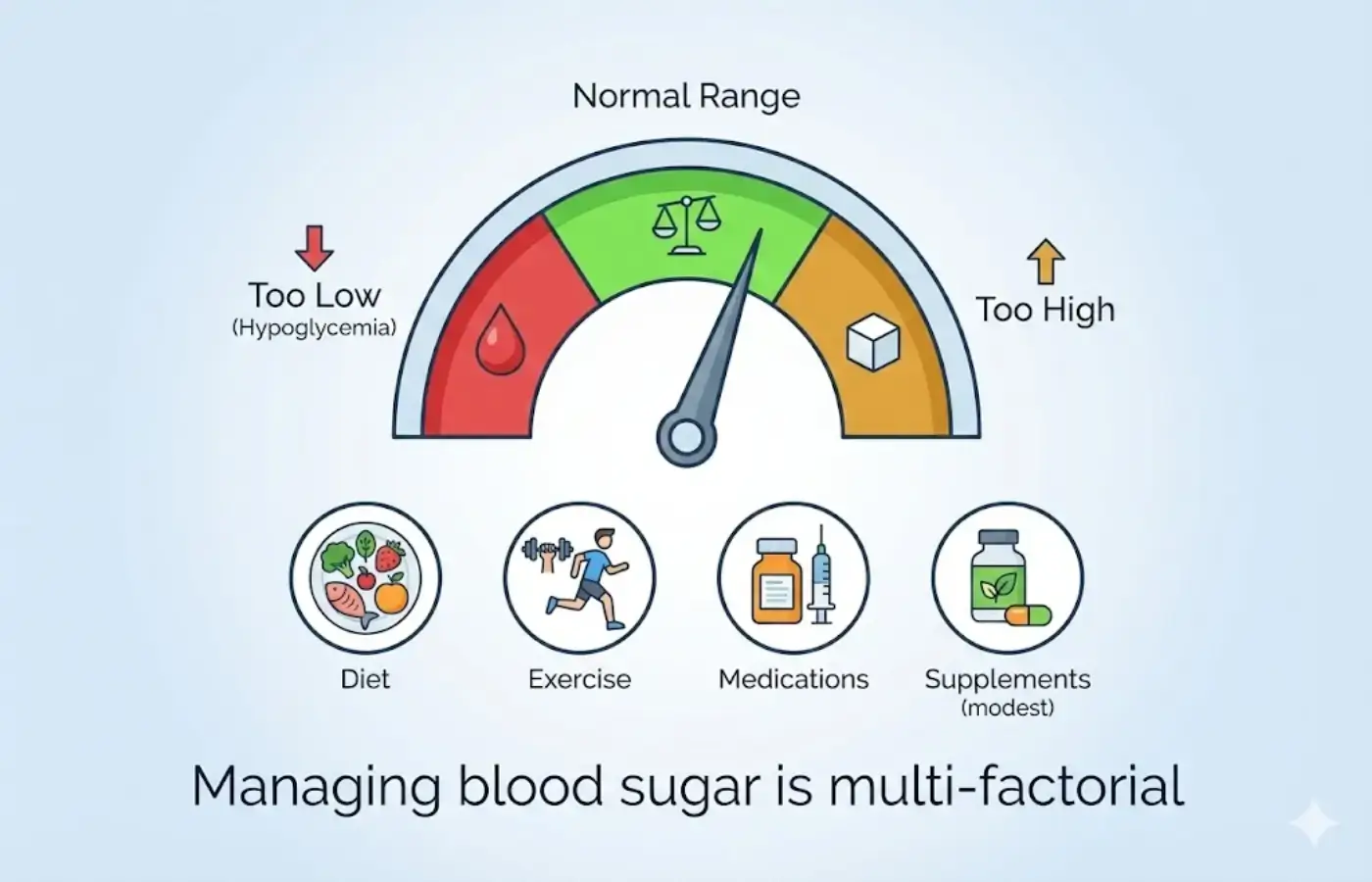
Simple diagram explaining blood sugar regulation
Blood sugar is complex—herbs are not a simple fix.

Cinnamon: The Evidence

What is it?

Cinnamon is a popular spice that's been studied for blood sugar effects. There are two main types: Ceylon cinnamon and Cassia cinnamon (the common grocery store variety).

What does the research say?

According to NCCIH [2]:

  • Some clinical studies suggest cinnamon may modestly lower blood sugar levels
  • Evidence is mixed—some studies show effects, others don't
  • Effects (if any) are much smaller than diabetes medications
  • "There isn't enough evidence to support using cinnamon for any health condition"

Our evidence ceiling

✅ Safe to say: "Cinnamon has been studied for blood sugar effects. Evidence is mixed; results vary."

❌ Don't say: "Treats diabetes," "Replaces Metformin," "Guaranteed blood sugar control."

Safety notes

  • Cassia cinnamon contains coumarin, which may affect the liver at high doses
  • May lower blood sugar — risk of hypoglycemia with diabetes meds
  • May interact with blood thinners

Garlic: The Evidence

What is it?

Garlic has been used for centuries for various health purposes. It contains allicin and other compounds with potential health effects.

What does the research say?

According to NCCIH [1]:

  • Most garlic research focuses on cardiovascular effects (blood pressure, cholesterol)
  • Some studies suggest modest effects on blood lipids
  • Some evidence for modest blood sugar influence, but not conclusive
  • Effects vary widely based on garlic form (fresh, aged, supplements)

Our evidence ceiling

✅ Safe to say: "Garlic has been studied for various cardiovascular and metabolic topics. Effects vary."

❌ Don't say: "Lowers blood sugar guaranteed," "Cures diabetes," "Unblocks arteries."

Safety notes

  • May interact with blood thinners (anti-platelet effect)
  • May add to blood sugar-lowering effects of diabetes meds
  • GI upset, garlic breath, allergic reactions possible

Cumin: The Evidence

What is it?

Cumin is a culinary spice that's been studied for metabolic effects.

What does the research say?

  • A systematic review/meta-analysis of randomized trials suggests cumin supplementation may affect glycemic indices; results vary [5]
  • Evidence is still limited and study quality varies
  • Effects (if any) are modest

Our evidence ceiling

✅ Safe to say: "Cumin has been studied for metabolic outcomes. Evidence is limited; results vary."

❌ Don't say: "Burns fat," "Treats diabetes," "Guaranteed results."

Safety notes

  • May add to blood sugar-lowering effects of diabetes meds
  • Generally well tolerated as a spice; supplement doses need caution
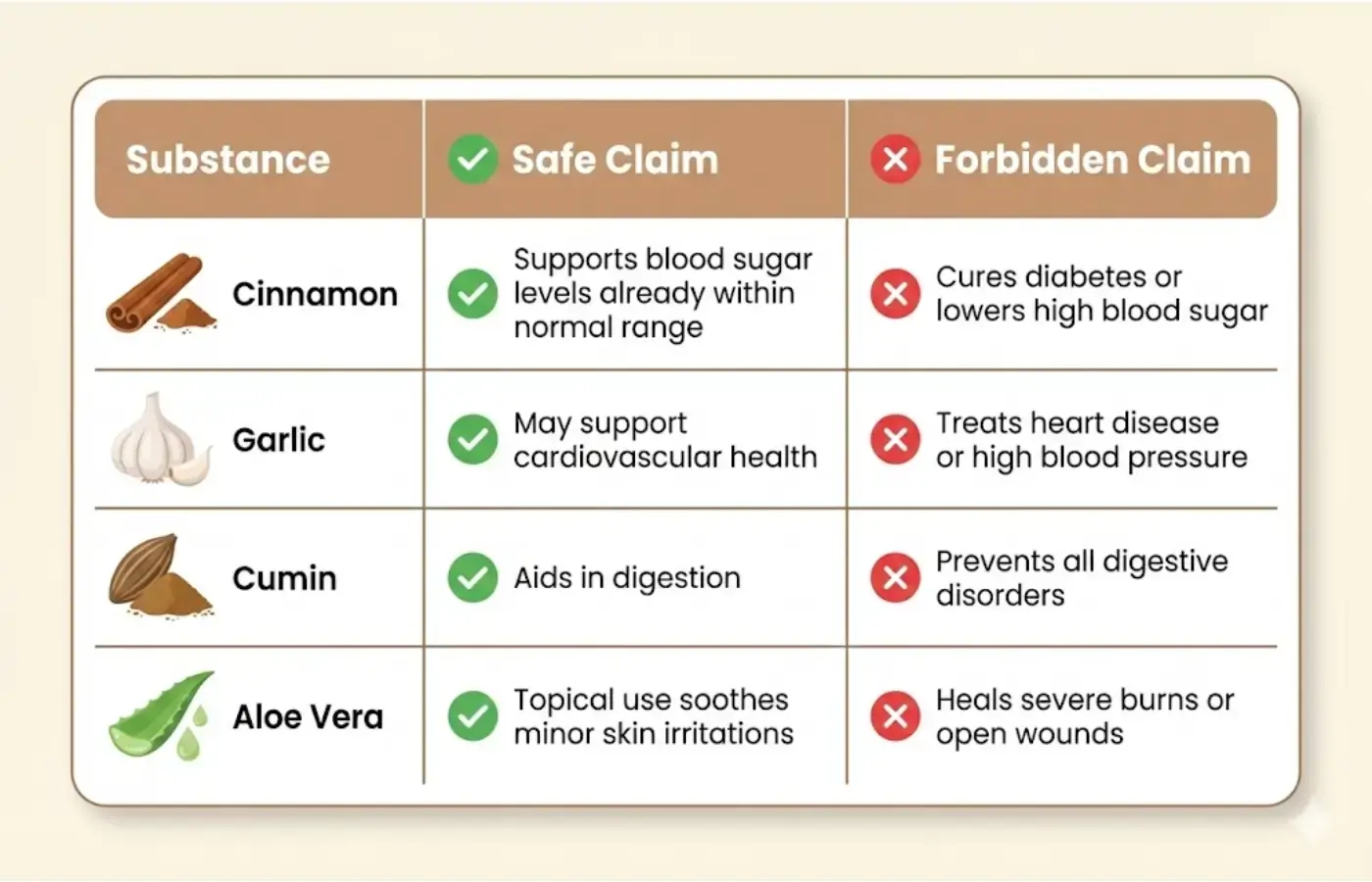
Table showing safe vs forbidden claims for blood sugar herbs
Know the evidence ceiling before making claims.

⚠️ Drug Interaction Risks for Diabetics

If you take any diabetes medications, be very careful with "blood sugar support" herbs:

If you take…

Possible concern

Why it matters

Any diabetes medication

Some supplements may also lower blood sugar (e.g., cinnamon, cumin, aloe)

Higher hypoglycemia risk

Always tell your doctor/pharmacist about all supplements you take [15][16].

Hypoglycemia warning signs

  • Shakiness, tremors

  • Cold sweats

  • Dizziness, confusion

  • Rapid heartbeat

If you experience symptoms of low blood sugar while combining supplements with diabetes meds, seek medical advice. If symptoms are severe (fainting, confusion), seek urgent care.

What to do

  1. Tell your doctor about ALL supplements you take

  2. Ask your clinician how to monitor safely when adding supplements

  3. Never stop or reduce medications without doctor guidance

Want to See a Product Analysis?

HolyHerbs contains cinnamon, garlic, cumin, and 9 other ingredients. We analyzed each one:

Read: HolyHerbs Review Philippines (2026) — All 12 Ingredients + Safety

Frequently Asked Questions

Pwede ba ang cinnamon sa diabetic?
Some studies suggest modest effects, but if you take diabetes meds, cinnamon may add to blood sugar lowering and cause hypoglycemia. Consult your doctor first.
Effective ba garlic para sa blood sugar?
Garlic is more studied for cardiovascular effects than blood sugar. Some evidence exists, but effects are modest. Not a replacement for medications.
Ano ang hypoglycemia?
Dangerously low blood sugar. Symptoms: shakiness, cold sweats, dizziness, confusion. Can happen when herbs + diabetes meds lower sugar too much.
Pwede bang itigil ang maintenance ko kung mag-herbal?
No. Never stop or adjust diabetes medications without your doctor's guidance. Supplements are not treatment.
Anong herbs ang may blood sugar effect?
Cinnamon, garlic, cumin, and aloe have been studied for various metabolic outcomes. Evidence varies and none should replace medications.

References

  1. [1] NCCIH. Garlic. ` Source
  2. [2] NCCIH. Cinnamon. ` Source
  3. [3] NCCIH. Using Dietary Supplements Wisely. ` Source
  4. [4] Mayo Clinic. Herbal supplements interactions. ` Source
  5. [5] Cumin supplementation and glycemic indices (systematic review/meta-analysis). ` -- Source
Read HolyHerbs Review