

Filipino patient in doctor consultation discussing medication side effects

Ubo sa Maintenance: Bakit May Dry Cough sa BP Meds?

ACE inhibitor-induced cough is common—but don't stop your medication without talking to your doctor. Learn why it happens and what to discuss.

3 min read

Quick Answer (TL;DR)

If you're taking BP maintenance and developed a dry, persistent cough, you might have an ACE inhibitor-induced cough. Here's what to know:

  • ACE inhibitors (enalapril, lisinopril, captopril, ramipril) cause dry cough in about 5-20% of users.
  • ARBs (losartan, valsartan, telmisartan) rarely cause this cough—they're often used as alternatives.
  • Amlodipine and other calcium channel blockers are NOT ACE inhibitors and typically don't cause this cough.
  • The cough usually develops weeks to months after starting the medication.

⚠️ CRITICAL: Do NOT Stop Your Medication

Huwag itigil ang maintenance mo on your own. Stopping BP meds without guidance can cause dangerous BP spikes. Talk to your doctor—they may switch you to an ARB or different class.

🚨 Get urgent help if cough comes with...

  • Chest pain or severe shortness of breath
  • Coughing blood
  • High fever
  • Swelling of face, tongue, or throat (angioedema—emergency!)

Affiliate disclosure: This article may contain affiliate links.

For heart/BP support options (as adjunct, not replacement), see: HeartWell Review Philippines (2026).
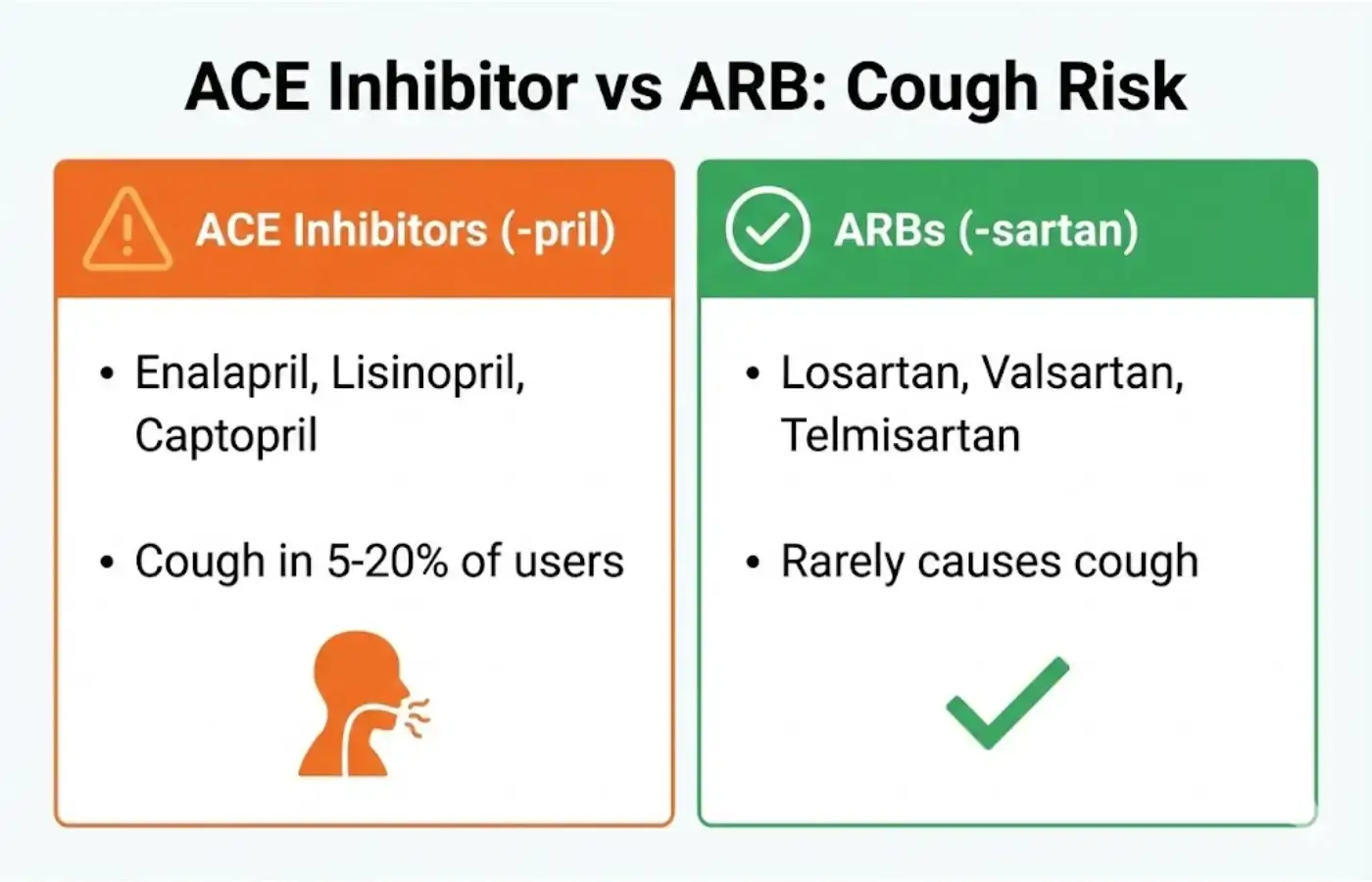
Comparison chart of ACE inhibitors vs ARBs and their cough side effects
ARBs rarely cause cough—your doctor may switch you.

Bakit May Ubo sa ACE Inhibitors?

ACE inhibitors block an enzyme that breaks down bradykinin—a substance that causes blood vessels to relax. When ACE is blocked, bradykinin accumulates in the lungs, irritating airways and triggering a dry, tickly cough.

Characteristics of ACE inhibitor cough:

  • Dry and persistent (non-productive—walang plema)
  • Tickly/scratchy sensation in throat
  • Worse at night or when lying down for some people
  • Starts weeks to months after beginning the medication (not immediate)
  • Resolves within 1-4 weeks after stopping the medication (but don't stop without guidance!)

Which Meds Are ACE Inhibitors?

Common ACE inhibitors in the Philippines:

  • Enalapril (Renitec)
  • Lisinopril
  • Captopril
  • Ramipril
  • Perindopril

If your medication name ends in "-pril", it's likely an ACE inhibitor.

What About Losartan?

Losartan is an ARB (angiotensin receptor blocker), NOT an ACE inhibitor. ARBs work differently and rarely cause cough. If you have ACE inhibitor cough, your doctor may switch you to an ARB like losartan, valsartan, or telmisartan.

What About Amlodipine?

Amlodipine is a calcium channel blocker (CCB)—different class entirely. It typically does NOT cause ACE inhibitor-type cough. Common side effects are ankle swelling and headache, not cough.

What to Do (Clinician Discussion, NOT Self-Adjustment)

  1. 1

    Identify your medication class

    Check if your BP med ends in "-pril" (ACE inhibitor) or "-sartan" (ARB). This helps you understand if the cough is expected.

  2. 2

    Note when the cough started

    Did it begin weeks/months after starting your medication? Track the timing.

  3. 3

    Describe cough characteristics

    Dry vs productive? When does it happen? How severe? Prepare this for your doctor.

  4. 4

    DO NOT stop your medication

    Stopping BP meds abruptly is dangerous. Keep taking them until you consult your doctor.

  5. 5

    Ask your clinician...

    "Is this an ACE inhibitor cough?" "Can I switch to an ARB or different class?" "Are there other causes we should rule out?"

  6. 6

    Give the new medication time

    If switched to an ARB, cough typically resolves in 1-4 weeks. Track and report back.

Other Causes of Chronic Cough (Rule These Out)

Not all coughs in people taking BP meds are medication-related. Other possibilities:

  • GERD (acid reflux) — can cause chronic cough without heartburn
  • Post-nasal drip — from allergies or sinusitis
  • Asthma — can present as cough-variant asthma
  • Infections — persistent cough after respiratory infection
  • Smoking — chronic bronchitis

Your clinician may want to evaluate these if switching medications doesn't resolve the cough.

Supplements and BP Medications

Important: Supplements do NOT replace BP medications. If you're on maintenance, continue taking your meds as prescribed.

Some people explore heart support supplements as an adjunct (alongside meds + lifestyle), not as a replacement. Any supplement addition should be discussed with your clinician due to potential interactions.

For a breakdown of one 8-ingredient heart support formula, see: HeartWell Review Philippines (2026).

Bottom Line

ACE inhibitor cough is real, common, and annoying—but NOT dangerous. The solution is switching to a different medication class (usually an ARB), NOT stopping your BP meds. Talk to your doctor, don't self-adjust.

Frequently Asked Questions

Normal ba ang ubo kapag nag-iinom ng maintenance?
Dry cough is a known side effect of ACE inhibitors (meds ending in "-pril"). It happens in 5-20% of users.
Losartan ba nagdudulot ng ubo?
Losartan is an ARB, not an ACE inhibitor. ARBs rarely cause this type of cough—they're often used as alternatives.
Pwede ko bang itigil ang gamot ko?
HUWAG. Never stop BP medication without consulting your doctor. Abrupt stopping can cause dangerous BP spikes.
Gaano katagal bago mawala ang ubo kung palitan ang gamot?
Usually 1-4 weeks after switching from ACE inhibitor to ARB. Track and report to your clinician.
Puwede bang supplement ang palitan sa maintenance?
Hindi. Supplements are optional support, not medication replacement. Continue your prescribed medications.

References

  1. [1] ACE inhibitor cough mechanism: Source (Accessed: 2026-02-06)
  2. [2] AHA BP Medications: Source (Accessed: 2026-02-06)
  3. [3] NHLBI High Blood Pressure: -- Source (Accessed: 2026-02-06)
Read HeartWell Review