

Filipino adult elevating feet on ottoman in living room for swelling relief

Manas sa Paa: Bakit Namamaga ang Paa Mo?

Swollen feet isn't always serious—but sometimes it signals heart, kidney, or medication issues. Learn the causes, red flags, and what questions to ask.

3 min read

Quick Answer (TL;DR)

Manas sa paa (swollen feet/ankles) is fluid accumulation and can have many causes:

  • Common/benign: prolonged standing/sitting, heat, high salt intake, pregnancy, minor injury
  • Medication-related: some BP meds (especially amlodipine/CCBs), steroids, NSAIDs
  • Serious: heart failure, kidney disease, liver disease, blood clot (DVT)

Bottom line: One-time mild swelling that goes down with elevation is often not urgent. Persistent, worsening, or one-sided swelling needs evaluation.

🚨 Get urgent help now if...

  • Sudden severe swelling in one leg (possible blood clot/DVT)
  • Swelling with chest pain or shortness of breath (heart-related)
  • Swelling with confusion, severe headache, or vision changes
  • Swelling with fever or redness (possible infection)

These may indicate emergencies. Seek urgent medical care.

Affiliate disclosure: This article may contain affiliate links.

For heart/BP support options, see: HeartWell Review Philippines (2026).
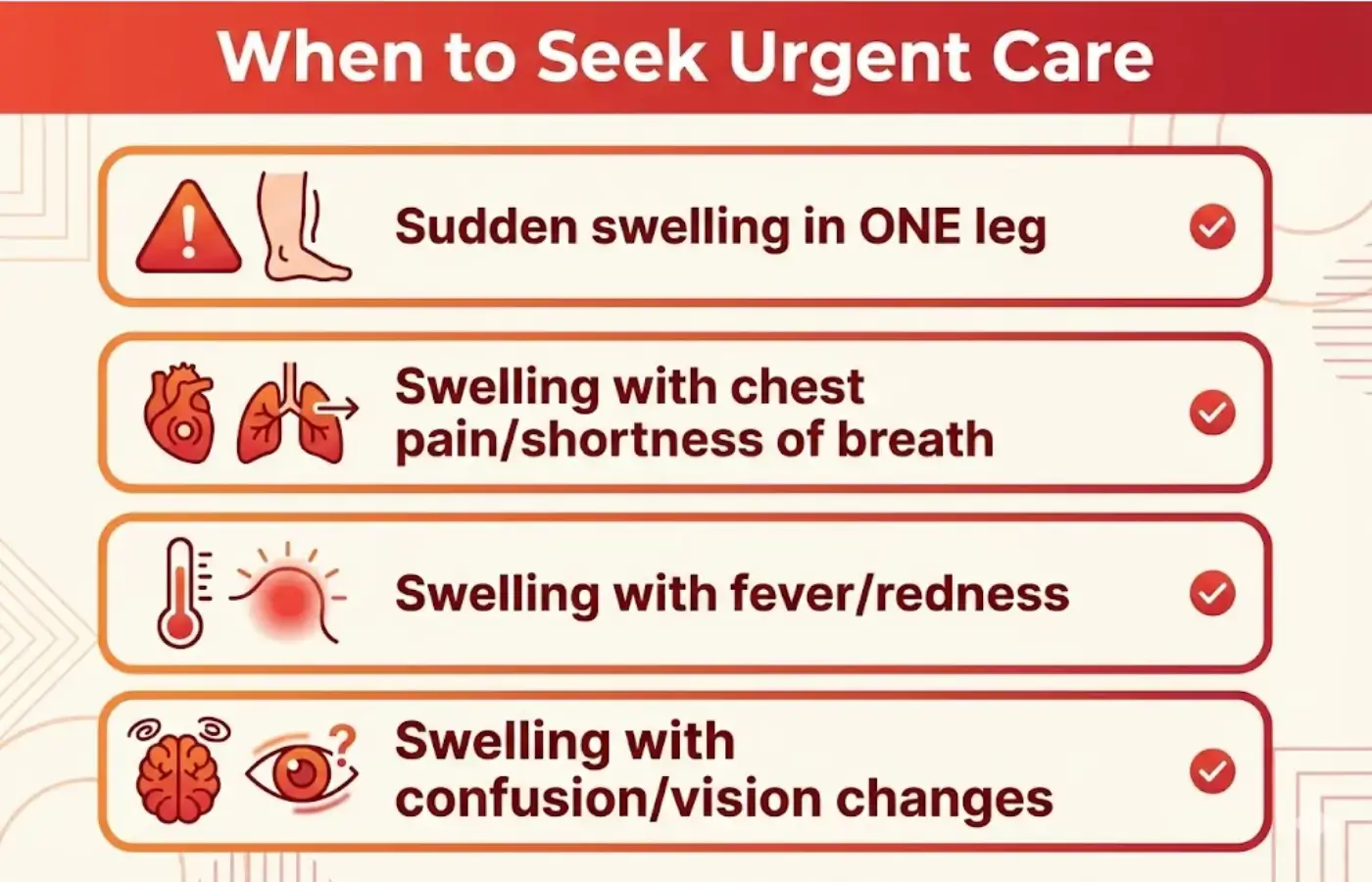
Checklist showing red flag symptoms that require urgent medical attention
These red flags need urgent evaluation—don't wait.

Common (Often Benign) Causes

1) Prolonged standing or sitting

Gravity pulls fluid to your lower extremities. Common if you stand all day (e.g., service workers) or sit for long periods (e.g., office workers, long flights).

2) Heat

Hot weather causes blood vessels to dilate, and fluid can accumulate in ankles/feet. Usually goes down when you cool down or elevate.

3) High salt intake

Sodium causes water retention. Reviewing diet (processed foods, salty snacks) may help.

4) Pregnancy

Mild swelling is normal during pregnancy due to increased blood volume. But sudden, severe swelling with headache/vision changes is a warning sign (preeclampsia).

Some medications commonly cause foot swelling as a side effect:

  • Calcium channel blockers (amlodipine, nifedipine) — very common
  • Steroids (prednisone)
  • NSAIDs (ibuprofen, mefenamic acid)
  • Hormone therapies

Important: Do NOT stop medications without clinician guidance. If you suspect your meds are causing swelling, discuss with your doctor—they may adjust the dose or switch medications.

Serious Causes (Need Evaluation)

Heart failure

When the heart can't pump efficiently, fluid backs up into extremities. Often both legs affected, worse at end of day.

Kidney disease

Kidneys can't remove excess fluid. Swelling may also appear in face/around eyes.

Liver disease

Low albumin from liver problems causes fluid to shift into tissues.

Blood clot (DVT)

Red flag: Sudden swelling in ONE leg with pain, warmth, or redness. This is urgent—blood clots can travel to lungs (pulmonary embolism).

Self-Assessment + Clinician Questions

  1. 1

    Observe the pattern

    Is swelling in both legs or just one? Does it go down after sleeping/elevating? Getting worse?

  2. 2

    Review your medications

    Note any meds you take, especially BP meds, steroids, or pain relievers. Bring this list to your doctor.

  3. 3

    Check other symptoms

    Shortness of breath? Chest pain? Fatigue? Changes in urination? Weight gain?

  4. 4

    Try basic interventions

    Elevate legs, reduce salt, take breaks from sitting/standing. If swelling improves, may be positional.

  5. 5

    See a clinician if...

    Swelling is persistent, worsening, one-sided, or accompanied by other symptoms (chest pain, shortness of breath, etc.).

  6. 6

    Prepare clinician questions

    "Could my medications be causing this?" "Should I get heart/kidney/liver function checked?" "Do I need an ultrasound for blood clot?"

Basic Management (After Ruling Out Serious Causes)

If your clinician confirms no serious underlying issue:

  • Elevate legs: above heart level when resting
  • Reduce salt: less processed foods, watch hidden sodium
  • Move regularly: avoid prolonged sitting/standing; calf exercises help pump fluid
  • Compression socks: may help if standing for work (ask clinician for appropriate level)
  • Stay hydrated: counterintuitive, but dehydration can worsen retention

What About Supplements?

Supplements do NOT treat heart failure, kidney disease, or blood clots. If edema is from a serious cause, you need proper medical treatment.

If your heart health is otherwise okay and you want optional support for cardiovascular wellness, see: HeartWell Review Philippines (2026).

Bottom Line

Manas sa paa has many causes—from standing too long to serious heart/kidney conditions. One-sided swelling, swelling with pain/redness, or swelling with chest symptoms needs urgent evaluation. For routine bilateral swelling, try elevation and salt reduction, then see a clinician if it persists.

Frequently Asked Questions

Normal lang ba ang manas sa paa?
Mild, occasional swelling that resolves with elevation is often benign. Persistent, worsening, or one-sided swelling needs evaluation.
Pwede bang medication ang dahilan ng manas?
Oo. Amlodipine and other BP meds, steroids, and NSAIDs commonly cause foot swelling. Don't stop meds—talk to your doctor.
Kailan ako dapat mag-alala?
Worry if: one-sided swelling, swelling with pain/redness, chest pain, shortness of breath, or swelling that keeps getting worse.
Effective ba ang compression socks?
They can help with mild, positional edema. For serious causes (heart failure, DVT), they're not sufficient—you need medical treatment.
Tumutulong ba ang supplements sa manas?
Supplements don't treat serious causes of edema. They're only optional support for general wellness—not a treatment.

References

  1. [1] Cleveland Clinic Edema: Source (Accessed: 2026-02-06)
  2. [2] Mayo Clinic Swollen Ankles: Source (Accessed: 2026-02-06)
  3. [3] AHA Heart Failure Signs: -- Source (Accessed: 2026-02-06)
Read HeartWell Review