

Filipino adult practicing calm breathing with hand on chest in peaceful setting

Kabog ng Dibdib: Why Is Your Heart Racing?

Palpitations are usually harmless—caused by caffeine, stress, or poor sleep. But sometimes they signal arrhythmia or other issues. Learn the difference.

3 min read

Quick Answer (TL;DR)

Kabog ng dibdib (palpitations) means you're aware of your heartbeat—it may feel fast, pounding, fluttering, or irregular. Common causes include:

  • Caffeine — coffee, energy drinks, tea
  • Stress/anxiety — activates fight-or-flight response
  • Poor sleep — fatigue affects heart rhythm
  • Dehydration — low fluid volume makes heart work harder
  • Medications/supplements — decongestants, some herbal products, stimulants

Most palpitations are benign. But some signal arrhythmias (abnormal heart rhythms) that need evaluation.

🚨 Get urgent help now if palpitations come with...

  • Chest pain or pressure
  • Severe shortness of breath
  • Fainting or near-fainting
  • Confusion or altered consciousness
  • Palpitations lasting more than a few minutes with no obvious trigger

These may indicate a serious arrhythmia. Seek urgent care.

Affiliate disclosure: This article may contain affiliate links.

For heart support options, see: HeartWell Review Philippines (2026).
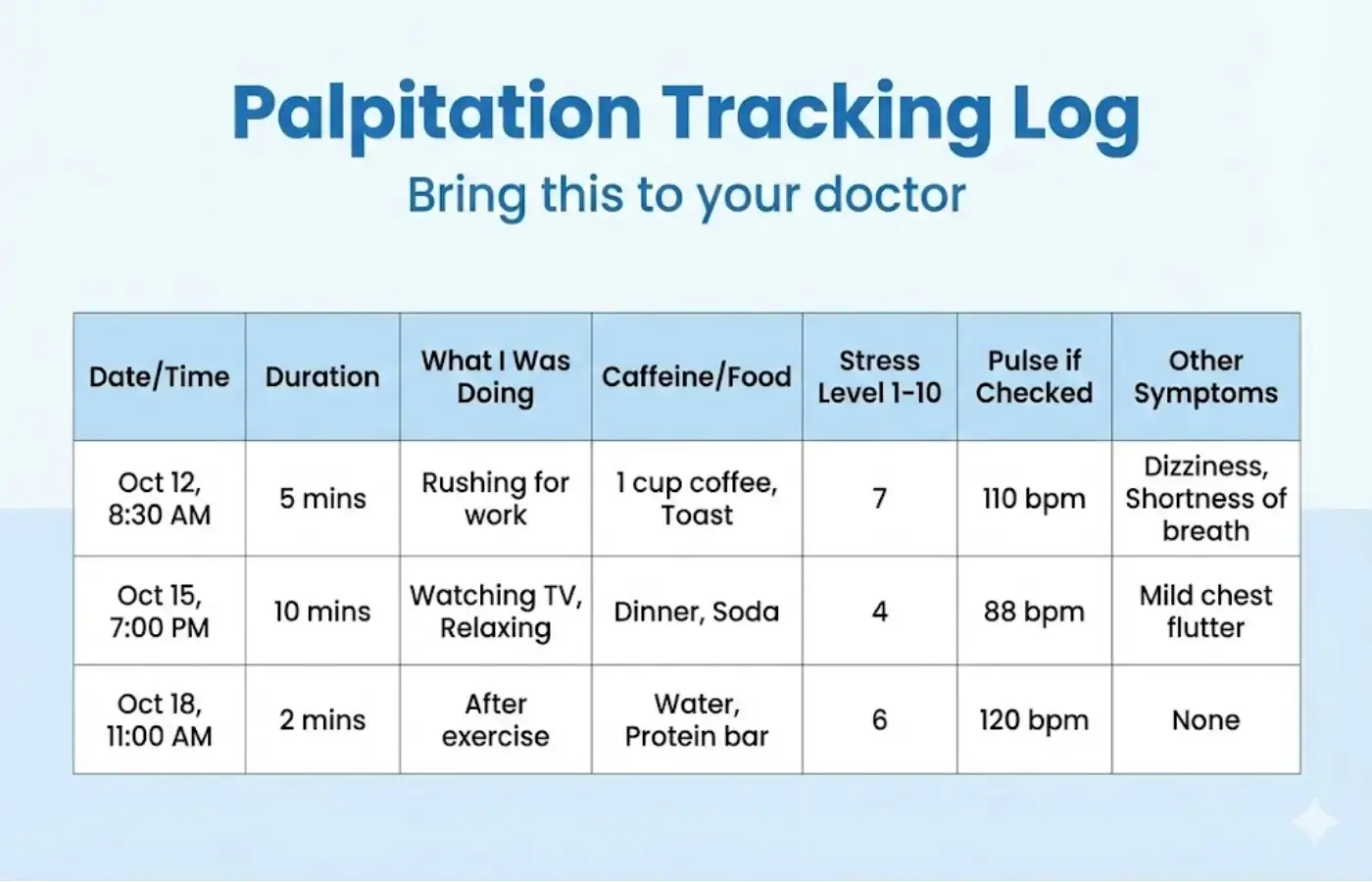
Template showing how to track palpitation episodes for doctor visit
Tracking helps your doctor diagnose. Bring this to your appointment.

Ano ang Palpitations?

Normally, you don't notice your heartbeat. Palpitations mean you become aware of it—it feels like your heart is:

  • Racing (mabilis)
  • Pounding (malakas)
  • Fluttering (parang may kumukurap)
  • Skipping beats

This can last seconds to minutes. It may happen with activity, at rest, or even wake you from sleep.

Common Triggers (Often Benign)

1) Caffeine

Coffee, energy drinks, tea, chocolate, some medications. Caffeine is a stimulant that can increase heart rate and trigger premature beats.

2) Stress and anxiety

The stress response releases adrenaline, which speeds up your heart. Panic attacks commonly present as palpitations.

3) Lack of sleep

Sleep deprivation affects the autonomic nervous system and can trigger irregular heartbeats.

4) Dehydration and electrolyte imbalance

Low fluid or minerals (potassium, magnesium) can affect heart rhythm.

5) Medications and supplements

  • Decongestants (phenylephrine, pseudoephedrine)
  • Asthma medications (albuterol)
  • Some herbal supplements (ephedra, bitter orange)
  • Nicotine

6) Hormonal changes

Pregnancy, menstruation, perimenopause can all affect heart rhythm.

When Palpitations Signal Something More

Sometimes palpitations indicate an arrhythmia—an electrical issue with the heart's rhythm. Examples:

  • Atrial fibrillation (AFib): irregular, often fast heart rhythm; increases stroke risk
  • SVT (supraventricular tachycardia): sudden rapid heartbeat episodes
  • PVCs (premature ventricular contractions): extra beats; usually benign but can feel alarming

A clinician may recommend an ECG, Holter monitor, or event recorder to capture what's happening.

How to Track Palpitations for Your Doctor

  1. 1

    Note when it happens

    Date, time, what you were doing. Was it at rest? After exertion? Upon waking?

  2. 2

    Track what you consumed

    Caffeine, alcohol, medications, supplements, food in the hours before.

  3. 3

    Note stress/sleep levels

    Were you stressed, anxious, sleep-deprived? These are common triggers.

  4. 4

    Describe the sensation

    Racing? Pounding? Fluttering? Skipping? How long did it last?

  5. 5

    Check your pulse (if safe)

    Count beats for 15 seconds × 4. Is it regular or irregular? This data helps your doctor.

  6. 6

    Use a smartwatch or pulse oximeter

    If you have one, check heart rate during episodes. Screenshot if possible.

  7. 7

    See a clinician if...

    Episodes are frequent, severe, prolonged, or come with concerning symptoms (chest pain, fainting, shortness of breath).

Underlying Conditions to Rule Out

If palpitations are frequent or concerning, your clinician may check for:

  • Thyroid disorders — hyperthyroidism speeds up heart rate
  • Anemia — low red blood cells make heart work harder
  • Heart structural issues — valve problems, cardiomyopathy
  • Electrolyte imbalances — potassium, magnesium, calcium

Basic tests include blood work (thyroid, CBC, electrolytes) and an ECG.

What Can You Do at Home?

  • Reduce caffeine: try cutting back and see if episodes improve
  • Manage stress: breathing exercises, mindfulness, adequate rest
  • Stay hydrated: especially in hot weather or after exercise
  • Sleep hygiene: 7-8 hours, consistent schedule
  • Avoid triggers: if you know certain things trigger episodes, minimize them

Supplements and Heart Rhythm

Heart support supplements are not treatments for arrhythmias. If you have diagnosed rhythm issues, you need proper medical management.

If your heart is otherwise healthy and you want optional cardiovascular support, see: HeartWell Review Philippines (2026).

Bottom Line

Kabog ng dibdib is often caused by caffeine, stress, or poor sleep—and usually isn't dangerous. But if episodes are frequent, prolonged, or come with warning symptoms, see a clinician for proper evaluation.

Frequently Asked Questions

Normal ba ang palpitations?
Occasional palpitations are common and usually benign— often triggered by caffeine, stress, or lack of sleep. Frequent or prolonged episodes warrant evaluation.
Ano ang pagkakaiba ng palpitations at heart attack?
Palpitations are awareness of heartbeat (racing, fluttering). Heart attack involves chest pain, pressure, shortness of breath, arm/jaw pain. If in doubt, seek emergency care.
Paano ko malalaman kung serious ang palpitations ko?
Red flags: chest pain, fainting, severe shortness of breath, prolonged episodes. Track patterns and see a clinician for ECG if concerned.
Caffeine ba talaga ang dahilan?
Caffeine is a very common trigger. Try reducing coffee/energy drinks for 1-2 weeks and see if episodes improve.
Tutulong ba ang supplements sa palpitations?
Supplements are not treatments for arrhythmias. If you have heart rhythm issues, you need proper medical evaluation and management.

References

  1. [1] AHA Palpitations: Source (Accessed: 2026-02-06)
  2. [2] Mayo Clinic Heart Palpitations: Source (Accessed: 2026-02-06)
  3. [3] Cleveland Clinic Palpitations: -- Source (Accessed: 2026-02-06)
Read HeartWell Review