

Filipino patient consulting a clinician about supplements and prescriptions (safe decision-making)

Berberine vs Metformin: Pwede Bang Palitan ang Gamot? (YMYL Guide)

You've heard berberine called "nature's metformin." But is the comparison accurate—and is it safe to switch? This guide explains with evidence and safety-first thinking.

3 min read

Quick Answer (TL;DR)

Berberine and metformin share some mechanisms (AMPK activation), but they are fundamentally different:

AspectMetforminBerberine
CategoryPrescription drugDietary supplement
FDA status (US/PH)Approved for T2D treatmentSupplement (no therapeutic claims)
Evidence qualityExtensive RCTs, decades of dataGrowing, but less robust
Dosing consistencyPharmaceutical-gradeVariable by brand

⚠️ CRITICAL SAFETY NOTICE

  • Do NOT stop or reduce metformin (or any diabetes medication) without your doctor’s approval.
  • Berberine is a supplement, not an FDA-approved drug for diabetes treatment.
  • This guide is educational—it does not diagnose, treat, or replace medical care.
  • If you're pregnant/breastfeeding, avoid berberine (may cause uterine contractions).

🚨 Get urgent help if...

Severe hypoglycemia (confusion, shakiness, sweating, fainting), signs of DKA (fruity breath, nausea, difficulty breathing), or any sudden worsening → seek emergency care.

Affiliate disclosure: This article contains affiliate links.

For a full breakdown of a multi-ingredient formula that includes berberine, see: GlucosTrol Review Philippines (2026).
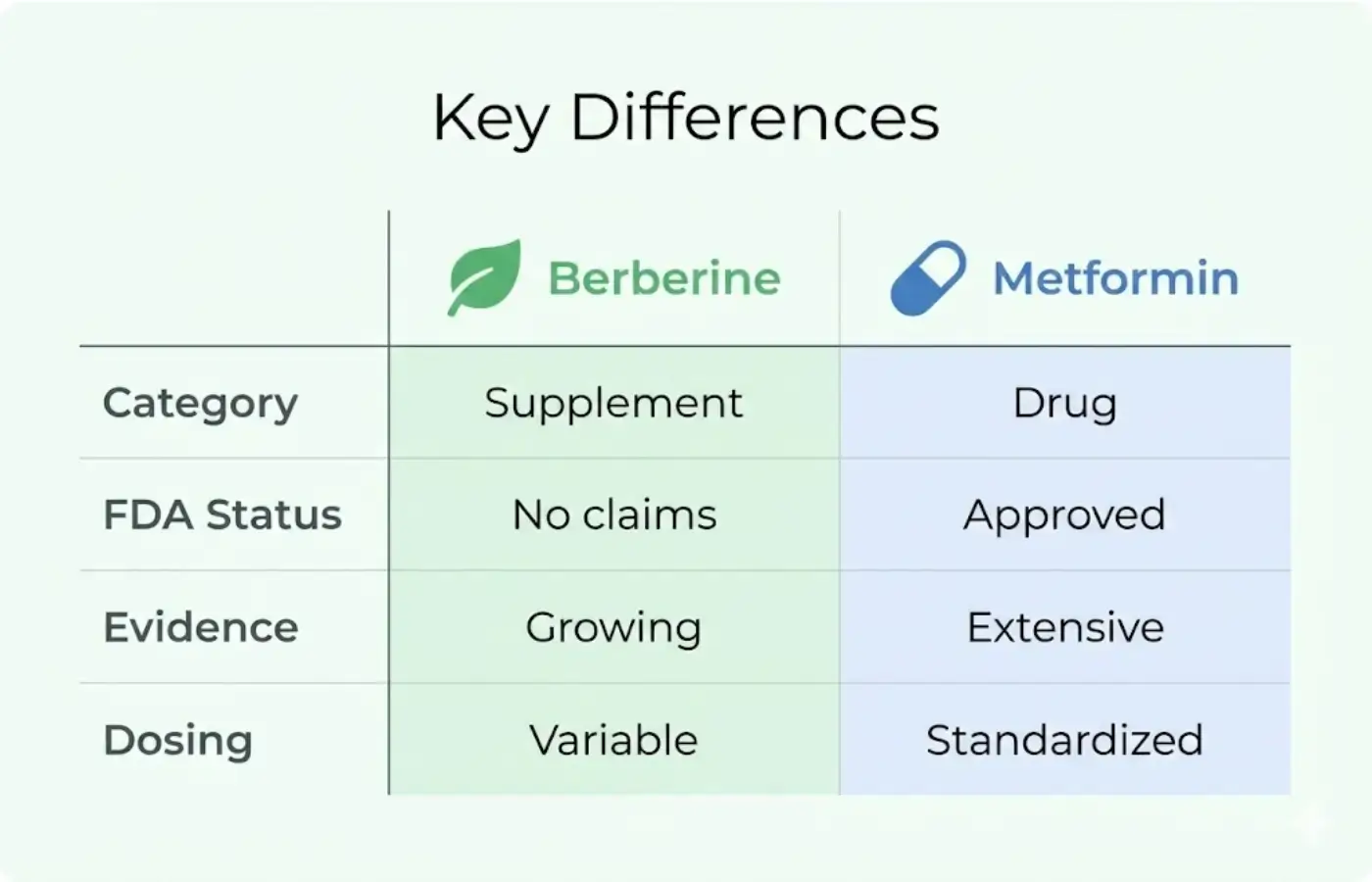
Comparison table of berberine vs metformin: category, FDA status, evidence strength, and dosing consistency
This is why “natural metformin” headlines are misleading.

Ano ang Berberine?

Berberine is a plant alkaloid found in goldenseal, barberry, and other plants. Research shows it activates AMPK (AMP-activated protein kinase)—the same pathway metformin affects.

Meta-analyses suggest berberine may support glucose control in type 2 diabetes [1]. But study quality varies, and most research is from China with smaller sample sizes.

Ano ang Metformin?

Metformin is a prescription medication used for type 2 diabetes for over 60 years. It has:

  • Extensive randomized controlled trials
  • Proven cardiovascular benefits
  • Well-characterized side effect profile
  • Affordable and widely available

Key Differences

1) Regulatory status

Metformin: FDA-approved drug. Manufacturing is regulated, dosing is standardized, quality is consistent.

Berberine: Dietary supplement. Quality varies by brand, no therapeutic claims allowed.

2) Evidence strength

Metformin: Thousands of studies, decades of real-world data, strong evidence for safety and efficacy.

Berberine: Promising, but fewer and smaller studies. Not yet comparable to metformin's evidence base.

3) Drug interactions

Both can interact with other medications. Berberine may affect drug metabolism (CYP enzymes). Always disclose supplements to your doctor.

4) Side effects

Metformin: GI issues (nausea, diarrhea) common initially; rare but serious lactic acidosis risk.

Berberine: GI issues similar to metformin; may cause uterine contractions (avoid if pregnant).

Can You Replace Metformin with Berberine?

Short answer: NO—not on your own.

Some studies explore berberine as adjunct therapy (alongside metformin), not as a replacement. Any medication changes must be discussed with your clinician.

How to Discuss with Your Clinician

  1. 1

    Never stop medications on your own

    Stopping metformin without guidance can cause blood sugar to spike dangerously. This is not negotiable.

  2. 2

    Bring evidence to your appointment

    If you want to discuss berberine, bring the research (PubMed links). Don't rely on social media claims.

  3. 3

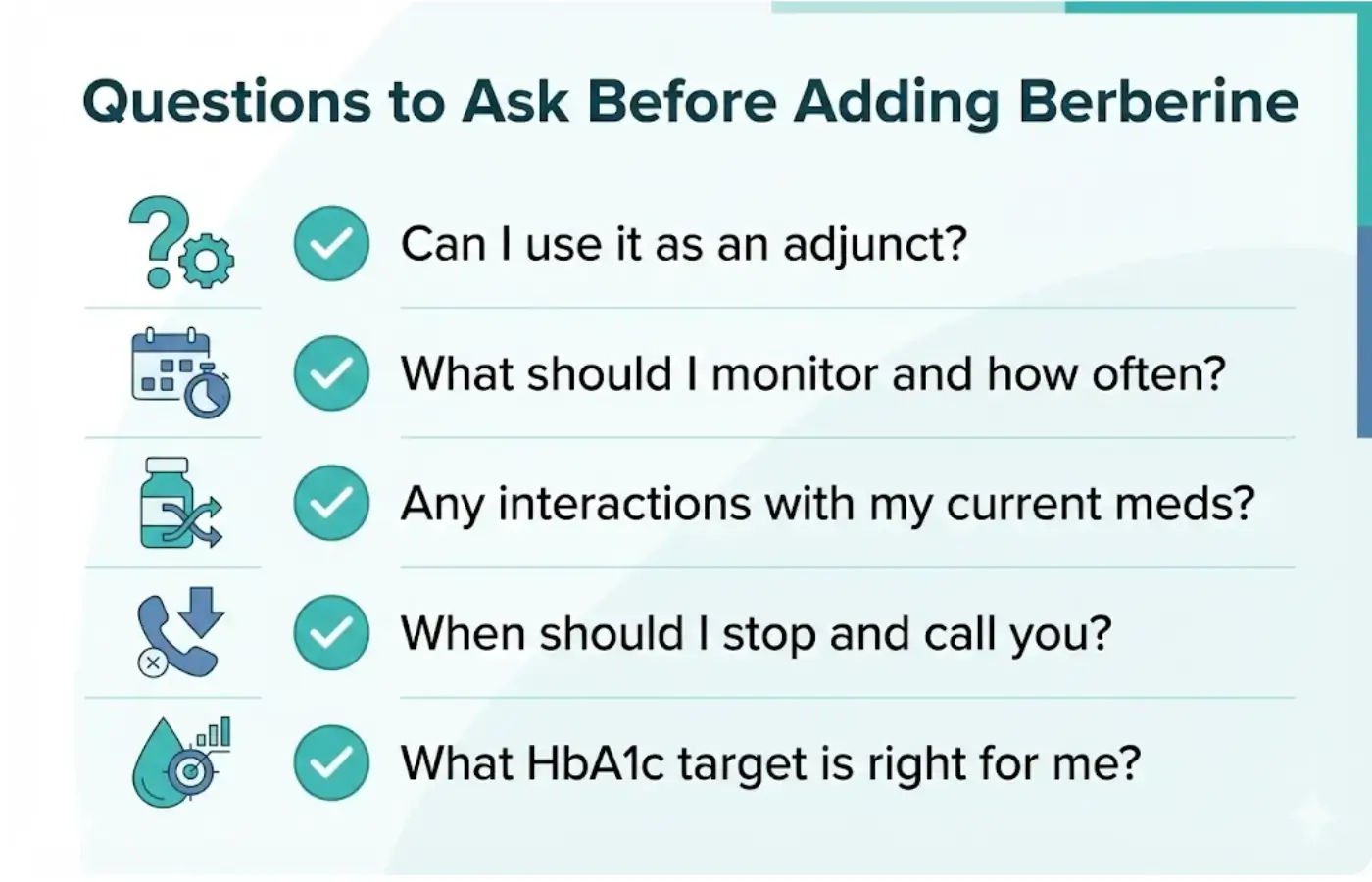
    Ask: "Can I add berberine as an adjunct?"

    This is different from replacing. Adjunct = alongside existing treatment.

  4. 4

    Disclose ALL supplements

    Berberine can interact with other meds. Full transparency helps your doctor keep you safe.

  5. 5

    Monitor closely if approved

    If your clinician approves trying berberine, increase blood sugar monitoring during the transition.

  6. 6

    Track HbA1c every 3 months

    This is the objective measure. Don't rely on "I feel better" alone.

Checklist infographic of questions to ask your clinician before adding berberine with diabetes medications
Go into the appointment prepared—safety first.

Berberine as Adjunct (Not Replacement)

Some research explores using berberine alongside metformin or other therapies—not instead of them. Potential benefits:

  • AMPK activation from multiple angles
  • Additional lipid support (berberine may help cholesterol)
  • Lower metformin dose needed (only if clinician approves)

Important: This must be clinician-supervised. Never self-experiment with medication changes.

Berberine in Combination Supplements

Many blood sugar support formulas include berberine alongside other ingredients (Gymnema, cinnamon, chromium). This may offer synergies—but also makes it harder to know which ingredient is doing what.

For a breakdown of one 9-ingredient formula that includes berberine, see: GlucosTrol Review Philippines (2026).

Bottom Line

Berberine shows promise—but it's NOT a proven metformin replacement. The evidence gap is significant. If you're curious, talk to your clinician about adjunct use (not replacement). And never, ever stop prescription meds without medical guidance.

Frequently Asked Questions

Pwede bang palitan ang metformin ng berberine?
No. Berberine is a supplement, not an approved drug. Never stop metformin without your doctor's approval.
Ano ang side effects ng berberine?
GI issues (nausea, diarrhea) are common. Avoid if pregnant—may cause uterine contractions.
Pwede bang i-combine ang berberine at metformin?
Some studies explore this, but it must be clinician-supervised. Don't self-experiment.
Gaano kalaki ang dose ng berberine?
Research doses vary (500-1500mg/day in divided doses). Follow product label and clinician advice.
Bakit mas maraming evidence ang metformin?
Metformin has 60+ years of research, thousands of RCTs. Berberine research is growing but not yet comparable.
Safe ba ang berberine pang matagalan?
Long-term safety data is limited compared to metformin. Discuss with clinician for ongoing use.

References

  1. [1] Berberine meta-analysis (T2D glucose-lowering): Source
  2. [2] Berberine AMPK mechanism: Source
  3. [3] Berberine systematic review: Source
  4. [4] WHO Diabetes fact sheet: Source
Read GlucosTrol Review