
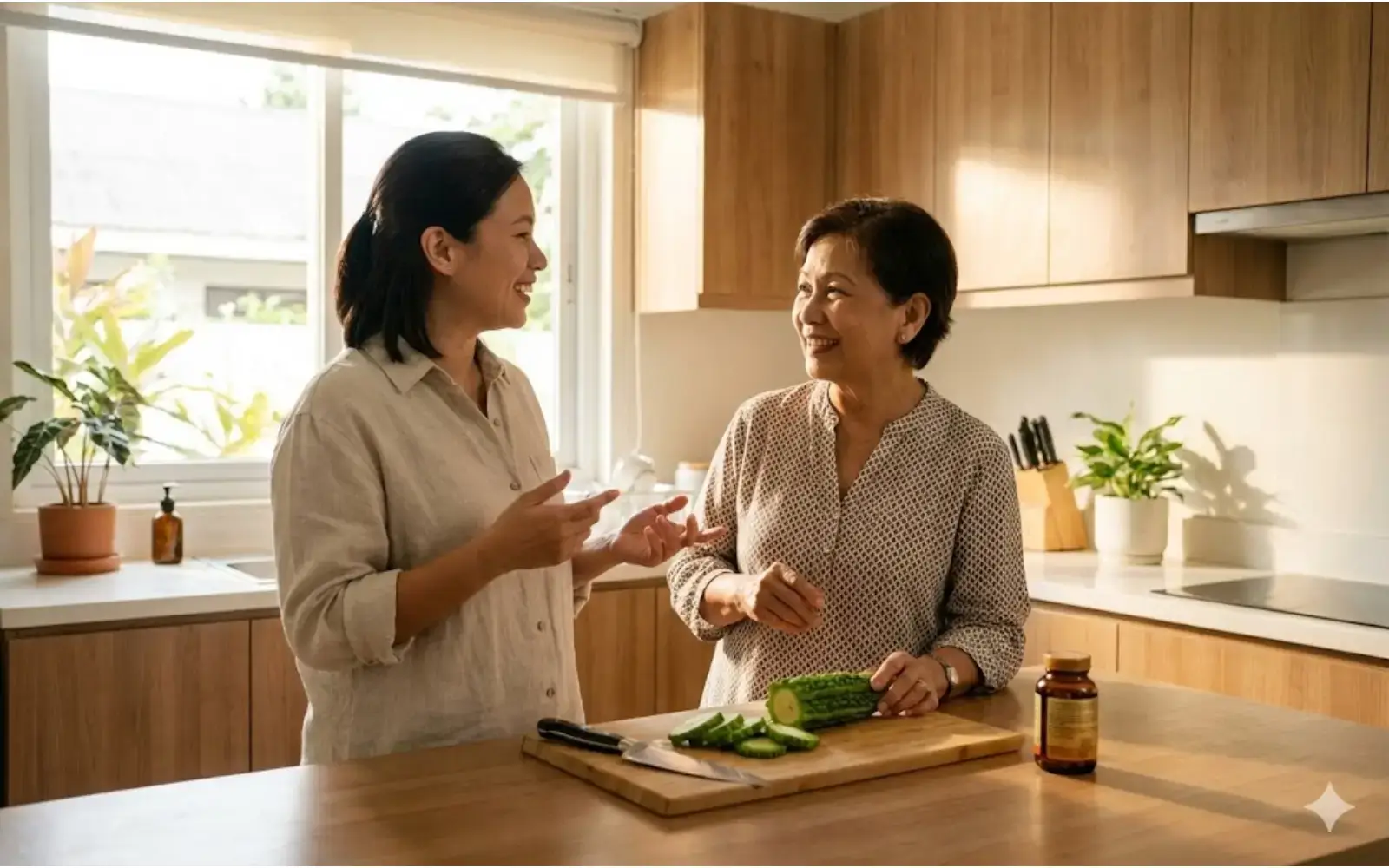
Filipino lola and daughter preparing bitter melon in kitchen, discussing capsule vs tea options

Ampalaya Capsule vs Tea vs Juice: Alin ang Mas Effective?

Bitter melon has been used for blood sugar support for generations. But does the form matter? Let's compare capsule, tea, and fresh juice—with evidence, not marketing.

3 min read

Quick Answer (TL;DR)

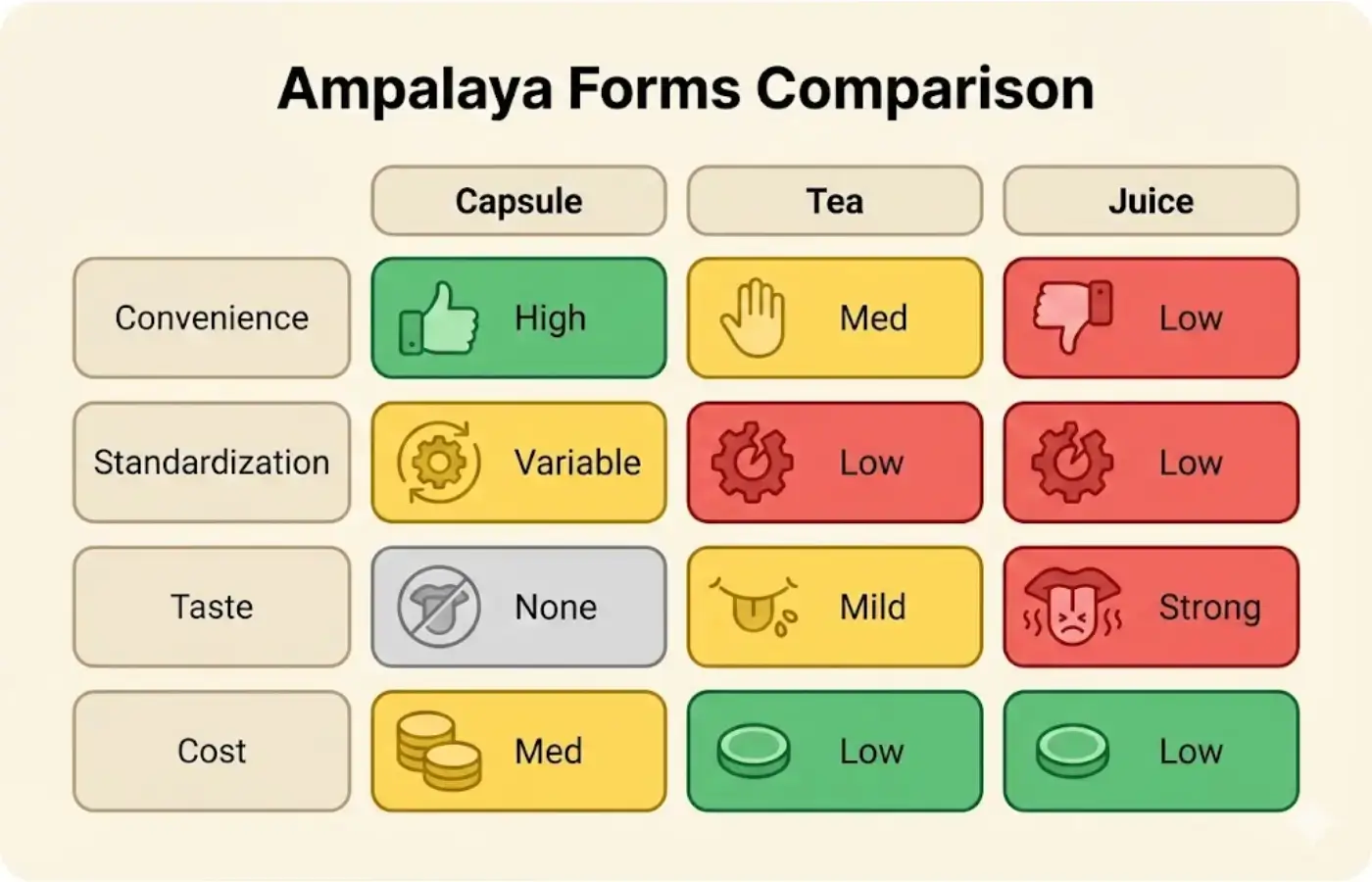
All forms of ampalaya (bitter melon) contain active compounds like charantin and polypeptide-p. But absorption, convenience, and evidence quality differ by form:

FormConvenienceStandardizationTaste
CapsuleHighVariable (depends on brand)None
TeaMediumLow (home-brewed)Mild bitter
Fresh juiceLowLow (varies by batch)Very bitter

Bottom line: Capsules offer convenience, but quality varies by brand. Fresh juice is "whole food" but impractical for many. Tea is a middle ground but weakest in concentration.

🚨 Important safety note

Ampalaya may lower blood sugar. If you're on diabetes medications, combining supplements could drop levels too low (hypoglycemia). Consult your clinician before adding any form.

Affiliate disclosure: This article contains affiliate links.

For a multi-ingredient formula that includes bitter melon, see: GlucosTrol Review Philippines (2026).
Ano ang Active Compounds ng Ampalaya?

Bitter melon (Momordica charantia) contains several compounds studied for metabolic effects:

  • Charantin: mixture of steroidal saponins
  • Polypeptide-p: sometimes called "plant insulin" (but NOT a replacement for insulin)
  • Vicine: alkaloid with glucose-lowering properties

What the research says

Systematic reviews show mixed results for bitter melon and blood sugar. Some studies show modest effects; others show no significant difference vs placebo. Effects depend on preparation, dose, and study quality [1].

Form-by-Form Breakdown

1) Capsule (standardized extract)

Pros: convenient, no bitter taste, potentially standardized dose

Cons: quality varies wildly by brand, not all products are standardized for active compounds

Best for: people who want convenience and consistent dosing (choose FDA-registered brands)

2) Tea (dried leaves or fruit)

Pros: easy to make at home, cheaper, mild taste

Cons: lower concentration of active compounds, inconsistent strength

Best for: people who want a daily habit with mild support, not primary intervention

3) Fresh juice

Pros: whole food, no additives, traditional approach

Cons: very bitter (hard to sustain), prep time, variable concentration

Best for: those committed to traditional methods and don't mind the taste

Critical Point: None of This Replaces Medication

Whether capsule, tea, or juice—ampalaya is a food supplement, not a drug. It cannot replace prescribed diabetes medications.

How to Choose + Safe Usage

  1. 1

    Check FDA registration (for capsules)

    Go to verification.fda.gov.ph and search the product name. Avoid unregistered brands.

  2. 2

    Look for standardization info

    Good capsule brands disclose charantin or polypeptide-p content. "Just bitter melon powder" is less predictable.

  3. 3

    Start with low dose

    Whether tea or capsule, start conservatively and observe how your body responds.

  4. 4

    Monitor for hypoglycemia if on meds

    Combining with diabetes medications can cause low blood sugar. Symptoms: shakiness, sweating, confusion.

  5. 5

    Consult clinician if on insulin/metformin

    Don't add bitter melon without discussing with your doctor first.

  6. 6

    Track results over time

    If using for blood sugar support, HbA1c every 3 months (not just how you "feel") is the real test.

Comparison table of ampalaya forms (capsule, tea, juice) across convenience, standardization, taste, and cost
Form matters more than people think.

Ampalaya Alone vs Combination Formulas

Some people prefer single-ingredient supplements. Others opt for combination formulas that include ampalaya plus other studied ingredients:

  • Gymnema sylvestre: may reduce sweet cravings
  • Berberine: most-studied for glucose support
  • Banaba: contains corosolic acid (insulin-mimetic)
  • Chromium: trace mineral for carb metabolism

Advantage of combinations: potential synergy, convenience vs buying 5 separate supplements

Disadvantage: harder to know which ingredient is doing what

For a breakdown of one 9-ingredient formula that includes bitter melon, see: GlucosTrol Review Philippines (2026).

Bottom Line

Ampalaya has traditional and emerging scientific support—but form matters. Capsules offer convenience (if quality is verified). Tea is mild and cheap. Fresh juice is hardcore traditional. None replace medications. Start slow, track results, and involve your clinician.

Frequently Asked Questions

Ano ang mas effective: ampalaya capsule or tea?
Capsules typically have higher concentration—but quality varies. Tea is milder. Neither is "proven" to replace medications.
Pwede bang mag-ampalaya kung may metformin ako?
Consult your clinician. Both lower blood sugar, so combining could cause hypoglycemia.
Gaano karaming ampalaya capsule per day?
Follow label instructions. Research doses vary (500-2000mg/day). Don't exceed without clinician guidance.
Totoo bang "plant insulin" ang ampalaya?
Polypeptide-p is sometimes called plant insulin, but it's not actual insulin and does not replace insulin therapy.
Safe ba ang ampalaya for pregnant women?
Limited safety data. Generally advised to avoid or consult clinician before use.

References

  1. [1] Bitter melon systematic review (T2D RCTs): Source (Accessed: 2026-02-06)
  2. [2] Bitter melon systematic review (T2D): Source (Accessed: 2026-02-06)
  3. [3] CDC Diabetes basics: Source (Accessed: 2026-02-06)
Read GlucosTrol Review